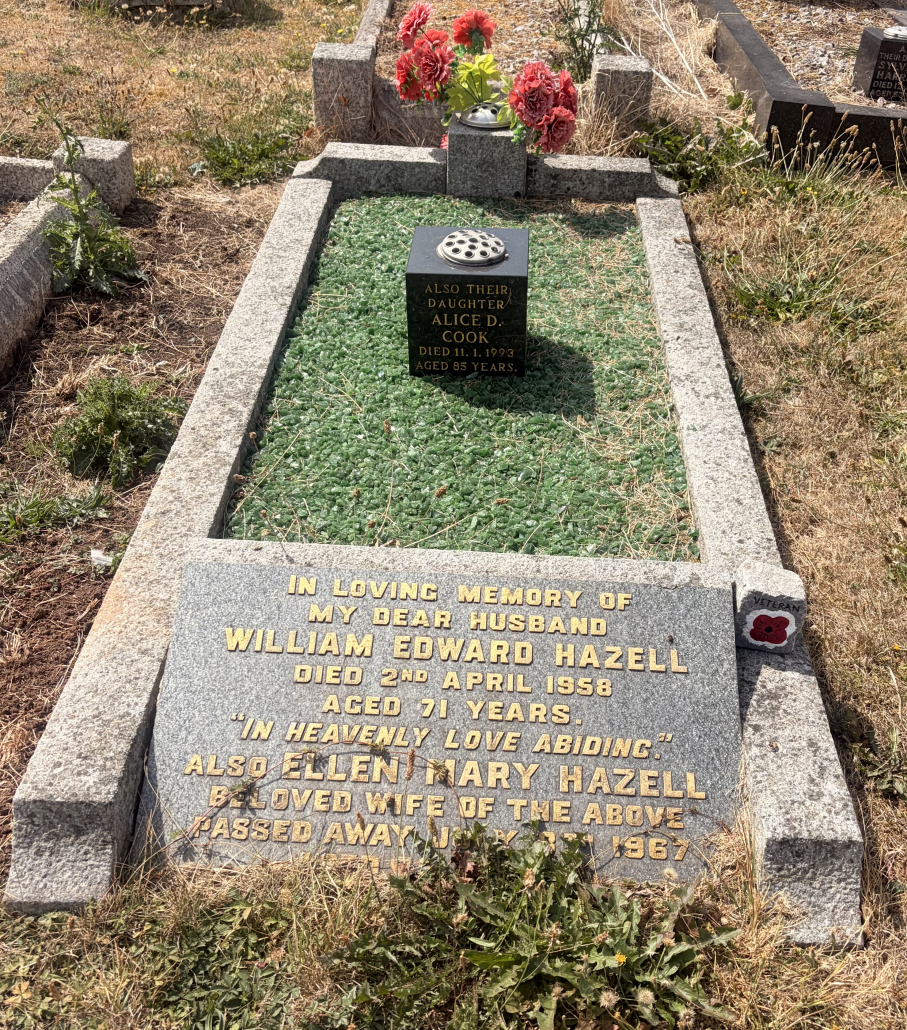
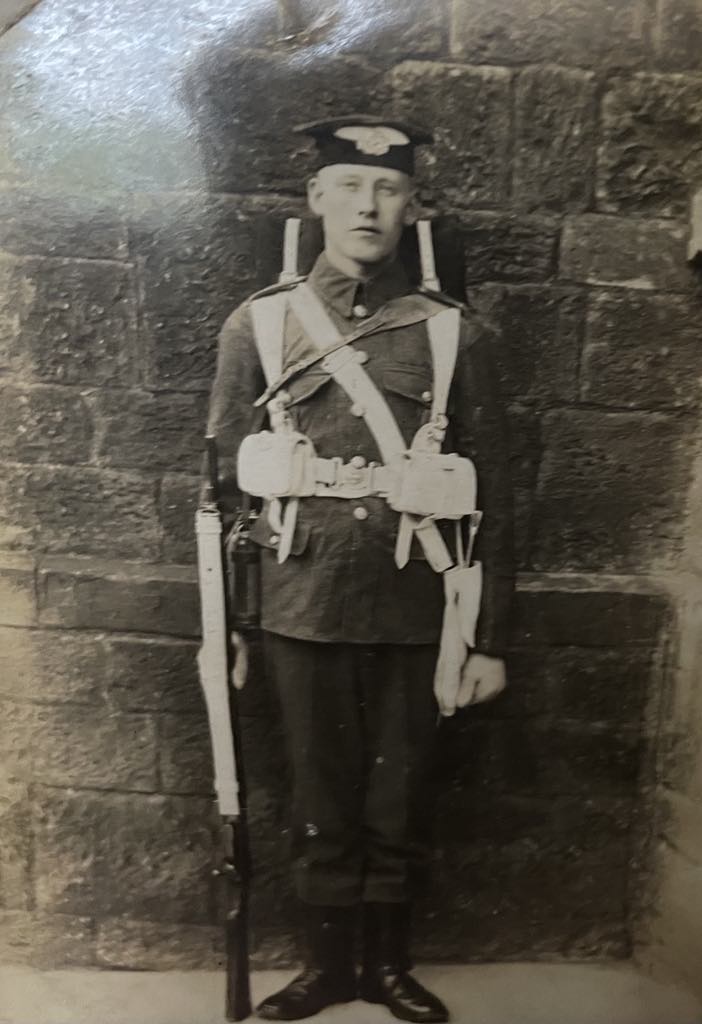
William Edward (Bill) Hazell was born in St Philips Marsh, Bristol, on 20 March 1886. His childhood was divided between the city and the quieter countryside of Pensford, where he lived with his grandparents. In 1907 he married Ellen Mary Hancock, beginning a family life that would eventually root itself firmly in Charfield.
When the Great War began in 1914, William was 28. He enlisted in the Royal Artillery as a Gunner and Bombardier, serving under regiment number 199415. His war took him to Ypres, one of the most brutal and defining fronts of the conflict. Like so many who endured the mud, shellfire and constant danger, William rarely spoke of his experiences, telling his family simply that it had been “too horrible to talk about.”
Despite the hardship, he found small ways to stay connected to home. He sent silk postcards to his wife and daughter — delicate reminders of love from the trenches. He also developed an unexpected fondness for eating snails, a habit picked up during his time in Belgium and remembered with humour by his family.
William was awarded the British War Medal and the Victory Medal for his service. Though the medals later passed to another branch of the family, his contribution remains part of Charfield’s quiet legacy of remembrance.
After returning home, William and Ellen settled in Charfield, appearing on the 1918 electoral roll at 2 Horsford Cottages. William worked at the Cadbury depot, while Ellen found employment at Tubbs Lewis. Their daughter Alice began work at the Mills at just 13, and William later joined her there as a carpenter.
In the 1921 census Bill was registered as a oil and petrol delivery driver for Anglo American Oil, and both Ellen and Alice are still working for the Tubbs Lewis Company in the Pin and Bone Mills in the village.
The Hazell family became deeply woven into village life. When Charfield suffered its tragic railway disaster in 1928, William and Ellen were among the first to help. They assisted in the aftermath and even served as pallbearers for the victims — a reflection of their compassion and commitment to their community.
William died aged 71 on 4 February 1957, at his home on Wotton Road. His story is one of quiet courage, devotion to family, and service both to his country and to the village he called home. He is laid to rest in the churchyard of the Charfield Congregational Church just off Wotton Road.
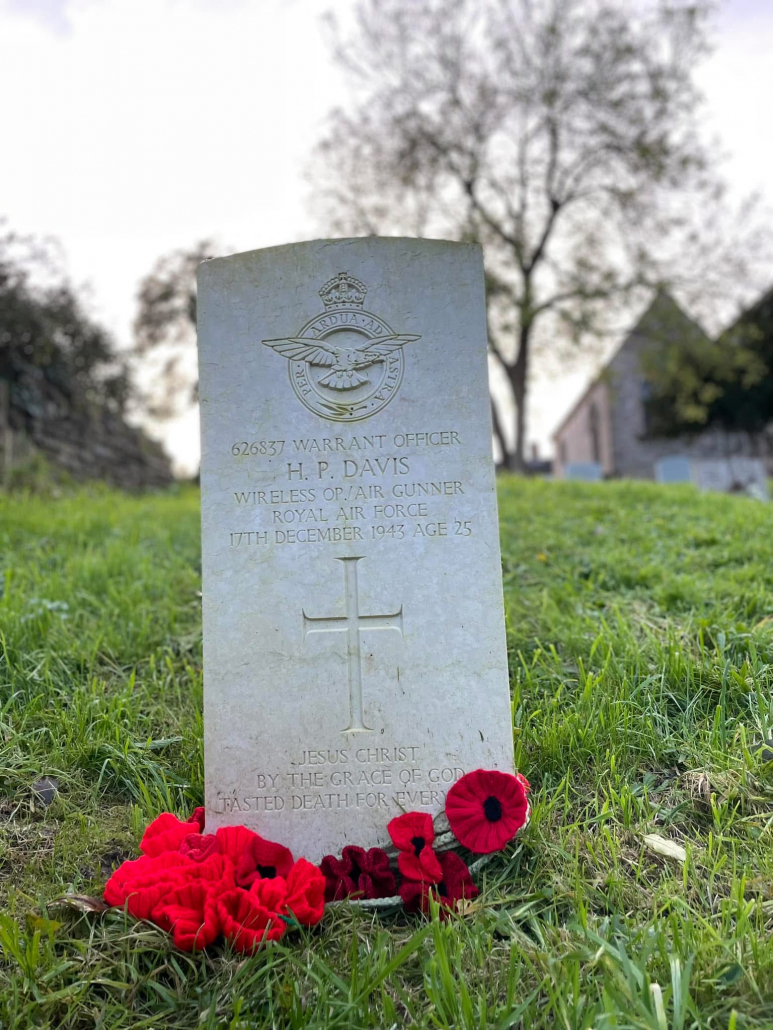
In contrast, the grave of Herbert Percy Davis is prominent, facing the well known memorial to victims of the 1928 train crash. WO Davis the son of Herbert and Emily of Mill Yard, joined the RAF in 1938, having formerly worked at Charfield Mill as a printer.
In December 1943, he was serving with 101 Squadron, Bomber Command, based at Ludford Magna, Lincolnshire, as a Wireless Operator on Lancasters. In the late afternoon of 16th December 1943, WO Davis’ Lancaster took off to join nearly five hundred others on an operation to bomb Berlin. This raid was one of a series, from August 1943 to March 1944, intended to destroy the German capital and bringing to an end the war.
The Lancaster in which he flew was unusual. It was known as an ‘Airborne Cigar’ or ABC aircraft. In addition to a normal bomb load it carried three wireless transmitters and an additional German speaking crew member, whose job it was to jam and confuse the Luftwaffe night fighter controllers’ instructions. Flying a direct route via Holland the Lancaster delivered its load on Berlin before returning via Denmark, having successfully escaped the attentions of the German defences.
On arriving over England just before midnight, the returning crews found that low cloud had descended over their home airfields. Ground controllers struggled to talk the aircraft down and advised the pilots to land where they could. The problem was that the nearest clear airfields were in Scotland or the West of England and most aircraft did not have sufficient fuel to reach there. WO Davis’ Lancaster flew west searching for a place to land. Shortly after midnight the pilot reported he was low on fuel. He attempted to bring the aircraft down below the cloud and at twenty seven minutes past midnight it crashed into high ground at Eastington in the Cotswolds. Possibly it was hoping to land at the nearby Little Rissington airfield.
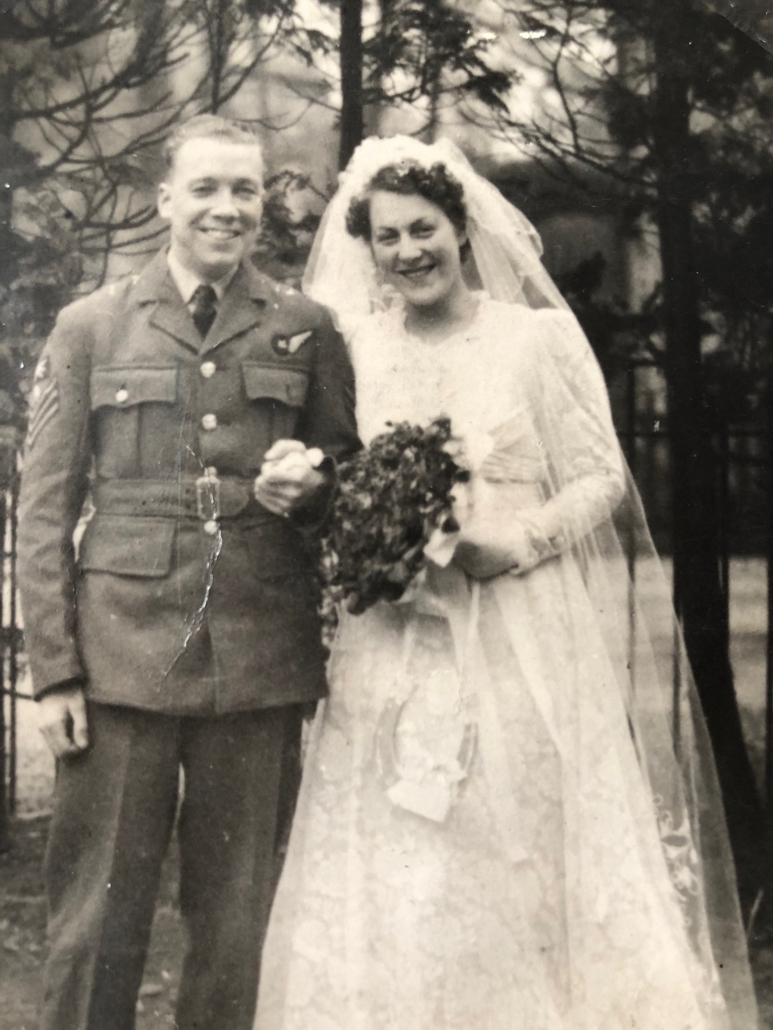
Of the eight man crew, only the mid-upper and Rear Gunners survived. Herbert Davis’ funeral was held on 23rd December 1943. He was 25 years old when he died and married to Joan, who came from Middlewich in Cheshire.
The 16th and 17th December 1943 was the worst night of the Second World War for Bomber Command, in terms of aircraft lost over England. Twenty eight crashed that night and four were abandoned by their crews, compared with twenty five lost over Germany. The cloud over England claimed one hundred and twenty seven lives.
John James “Jim” Cooke grew up in a proud Wotton‑under‑Edge family whose story reflects both the hardship and the resilience of wartime Britain. His father, James Cooke, served with the 5th Brigade of the Royal Field Artillery (RFA) before returning home to become the landlord of The Royal Oak, one of the town’s most familiar and well‑loved pubs.
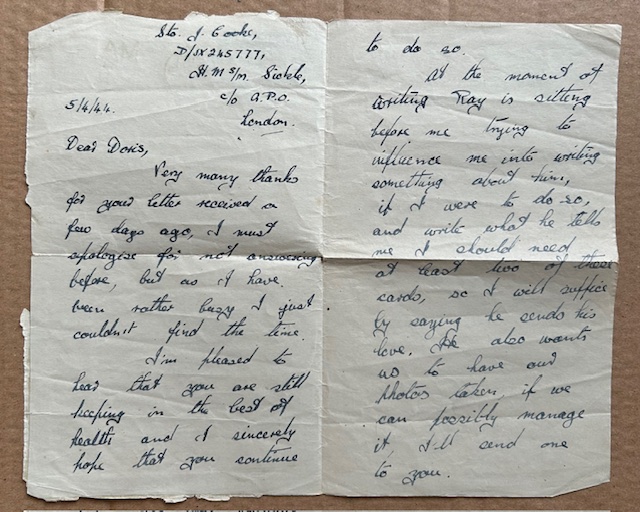
Jim was the elder brother to Charlie Cooke, who would later follow him into the Royal Navy. Their younger sister Doris appears frequently in the surviving wartime letters — a warm reminder of the family affection that stretched across oceans during the war years.
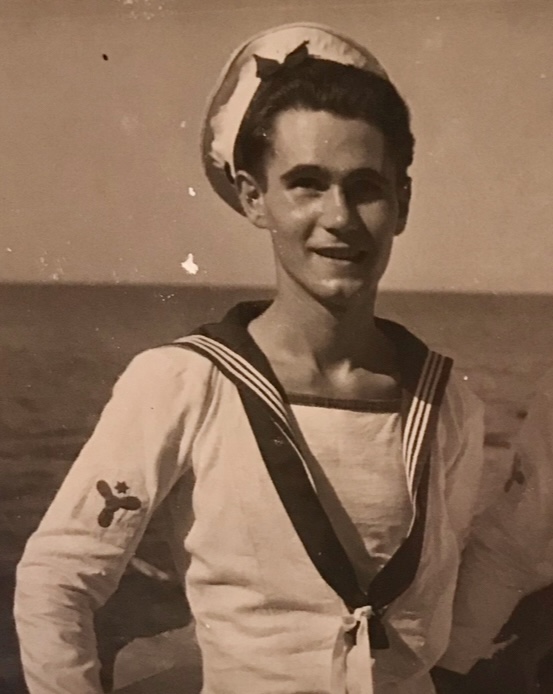
Thanks to the care of local residents, photographs of Jim and Charlie have been preserved, giving a face to the names and stories that shaped the town’s wartime experience.
A Story Passed Down Through Neighbours
Charlie Cooke
One of the most touching aspects of the Cooke family’s legacy is how it has been kept alive. Charlie Cooke lived in Venns Acre near Steph Joynson, who in 2025 took on the role as the Wotton Poppy Appeal Organiser. Steph remembers Charlie fondly and has shared the Cooke family’s story, along with the treasured photographs and letters that survived.
This connection is made even more meaningful by the fact that Steph’s own father is also a Royal Navy veteran. The Cooke brothers’ story resonates deeply with her, linking the service of past generations to those who continue to serve today.
Through Steph’s efforts, the Cooke family’s experiences, once private memories, have become part of Wotton’s shared remembrance.
Jim Cooke’s Service in the Royal Navy
John (Jim) Cooke
Jim joined the Royal Navy as a Stoker 1st Class, a physically demanding and often dangerous role. Working deep within the submarine’s engine room, he endured sweltering heat, cramped conditions, and the constant threat of enemy action.
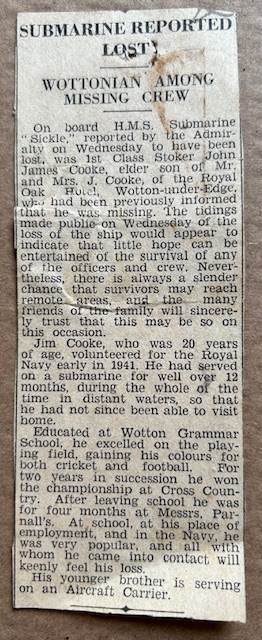
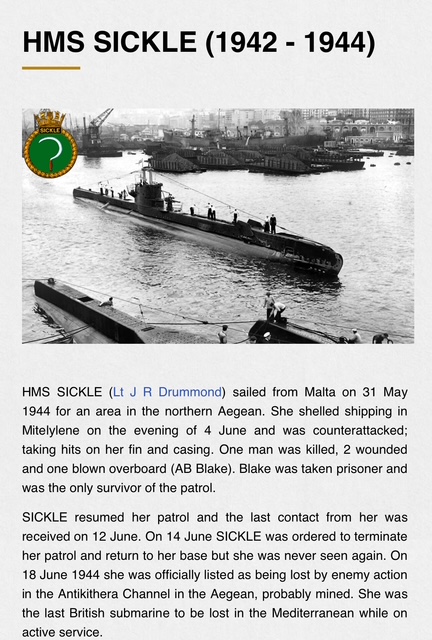
He served aboard HMS Sickle, an S‑class submarine operating in the Mediterranean — one of the most perilous theatres of the war. Submariners faced mines, aircraft, patrol boats, and the ever‑present danger of mechanical failure. Their missions were carried out in silence and secrecy, often with little recognition.
The Loss of HMS Sickle
On 18 June 1944, HMS Sickle was lost with all hands. Jim was just 20 years old.
The exact cause of the sinking remains unknown, but the most widely accepted theory is that the submarine struck a mine while returning from patrol near the Greek islands. No survivors were ever found, and the submarine’s final resting place has never been conclusively identified.
For the Cooke family, the loss was devastating — one son taken by the war, another still serving at sea.
Charlie Cooke’s Service and Long Life
Unlike his older brother, Charlie survived the war. He served in the Royal Navy aboard aircraft carriers, a very different but equally vital role in the fight for control of the seas. Life on a carrier brought its own dangers, aircraft operations, enemy attacks, and the constant movement of a floating airfield, but Charlie came home safely.
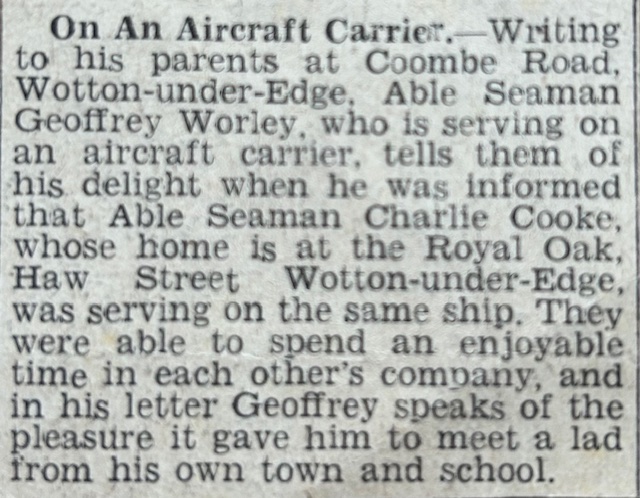
One surviving newspaper report even tells of another Wotton lad, Able Seaman Geoffrey Worley, who unexpectedly bumped into Charlie on one of the ships he was posted to, later writing home to his parents about the joy of seeing a familiar face so far from Gloucestershire.
He returned to Wotton‑under‑Edge, where he lived a long and happy life. His memories, stories, and photographs helped preserve Jim’s legacy, ensuring that his brother’s sacrifice was never forgotten. Charlie’s friendship with neighbours like Steph Joynson helped keep the family’s wartime experiences alive long after the conflict ended.
A Legacy Preserved in Letters and Photographs
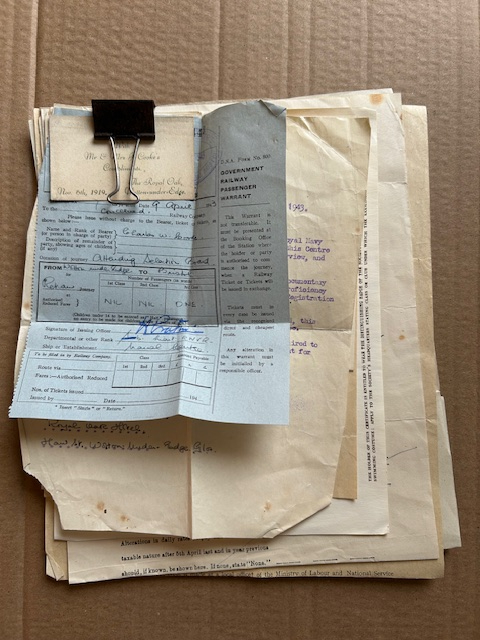
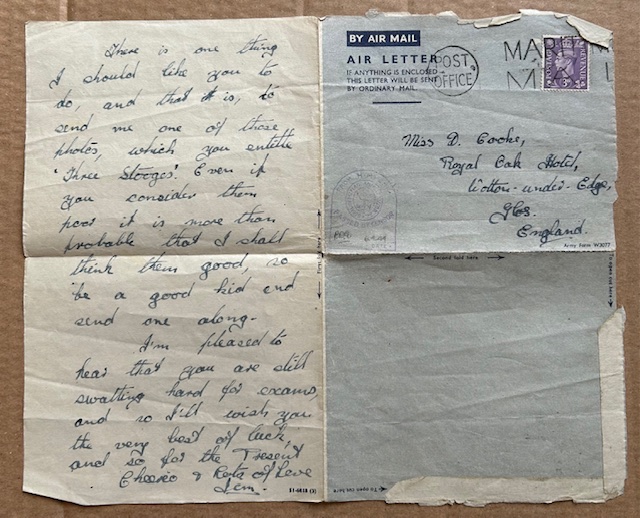
The Cooke family’s wartime correspondence offers a rare and intimate glimpse into their lives, especially the letters Jim wrote to his younger sister Doris, filled with warmth, humour, and the optimism of a young man far from home.
These cherished notes sit alongside memories of life at The Royal Oak, where their father kept the pub running, and stories of Charlie’s naval service aboard aircraft carriers.
Together with the photographs now shared within the community, these letters and recollections ensure that Jim and Charlie are remembered not just as servicemen, but as sons, brothers, and friends whose lives remain woven into the story of Wotton‑under‑Edge.
Wotton‑under‑Edge Remembers
Jim Cooke’s name is carved into the Wotton‑under‑Edge War Memorial, one of the fifteen local men who lost their lives in the Second World War. His story, now enriched by the memories preserved by neighbours and family friends, stands as a testament to the town’s enduring commitment to remembrance.
Charlie is buried at St Marys’ Wotton, in the carefully tended ashes plots.
Through the efforts of people like Steph Joynson, and through the service of families like the Cookes, Wotton‑under‑Edge continues to honour its past while inspiring future generations to remember the cost of peace.
https://veteransontheedge.co.uk/wp-content/uploads/2026/04/IMG_1358.jpg694553Naylorj542http://veteransontheedge.co.uk/wp-content/uploads/2025/11/New-Logo-Small-300x284.pngNaylorj5422026-04-11 16:22:482026-04-12 08:05:13John James “Jim” COOKE: A Wotton‑under‑Edge Submariner Remembered
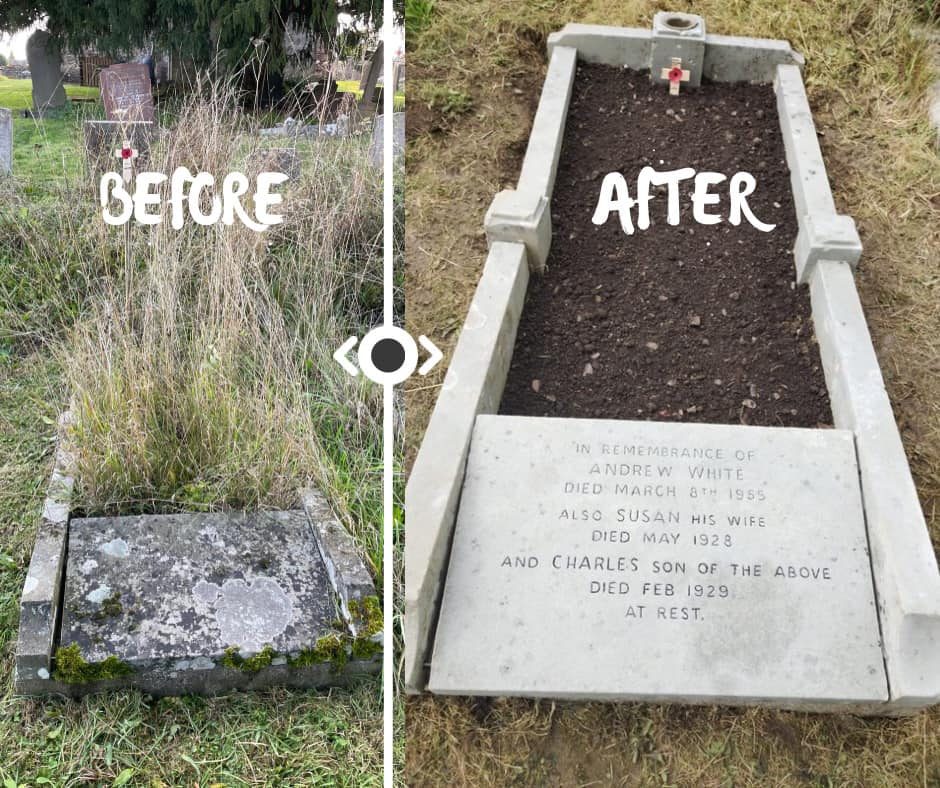
https://veteransontheedge.co.uk/wp-content/uploads/2026/02/A-White.jpg20481138Naylorj542http://veteransontheedge.co.uk/wp-content/uploads/2025/11/New-Logo-Small-300x284.pngNaylorj5422026-02-07 12:51:152026-02-07 12:51:19Andrew W WHITE – Charfield
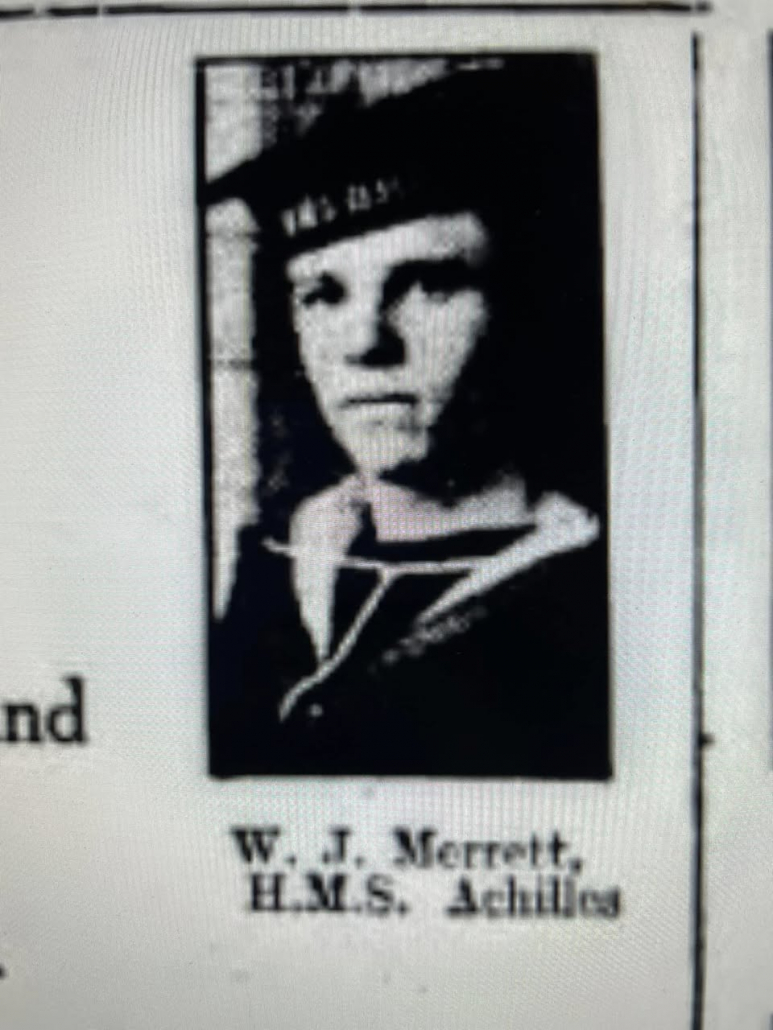
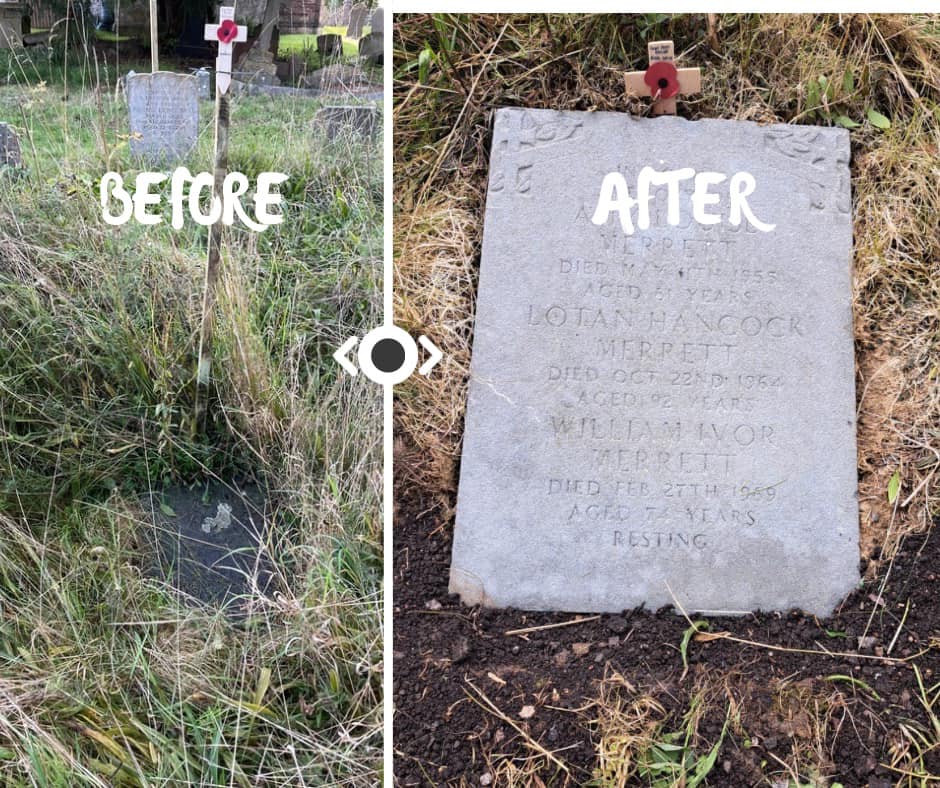
William Ivor Merrett enlisted in the Royal Navy in 1929 and was a Cheif Petty Officer by the time he left. Serving in many ships such as HMS Achilles and the Victory. He was awarded the Long Service and Good conduct Medal as well and the Kings Sulver Jubilee Medal and his record show exemplary conduct throughout.
His grave is located in the St James Churchend, Charfield, closed graveyard and was restored by Pete who is a Royal Navy veteran himself.
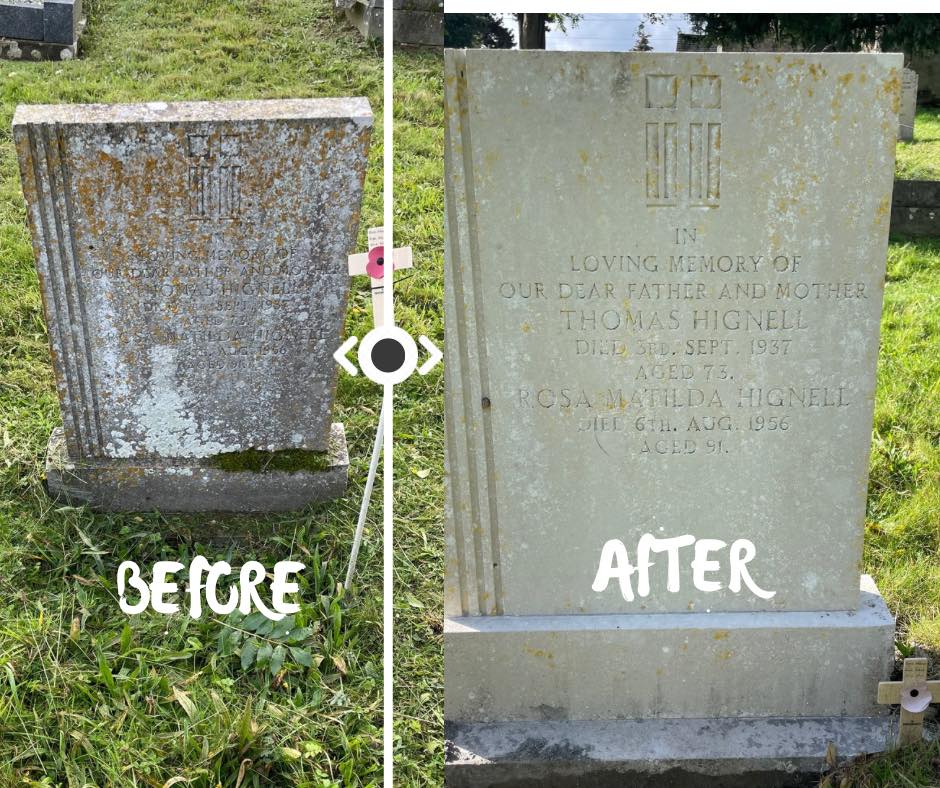
Thomas Theophilus George Hignell Died 1937 aged 73
Thomas was a Boer War veteran, enlisting into the Royal Marines in 1881. Not much more could be found out about Thomas but he was the local Ironmonger in Charfield in 1925.
This grave, which is in the old churchyard at St James’s Churchend, Charfield, was restored by fellow Navy Veteran, Pete.
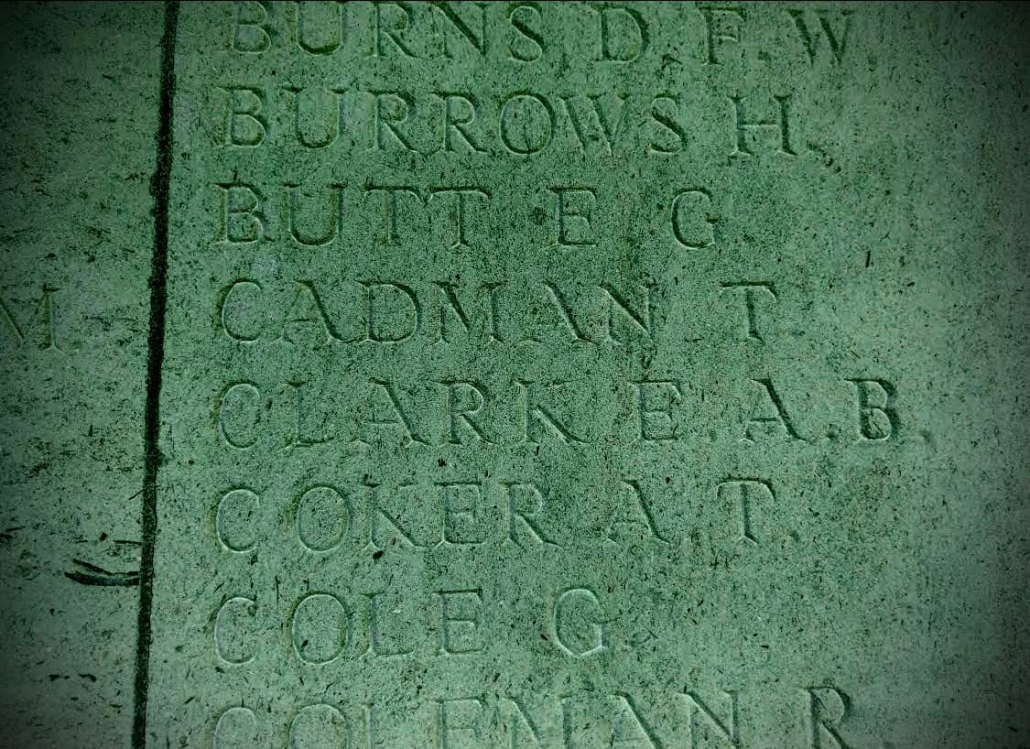
No Known Grave – commemorated on the Vis-en-Artois Memorial to the Missing Ernest Clark was born in early 1899 at Charfield. He was one of two sons and a daughter born to Ernest S T and Annie Alice Clark of Mill Road, Charfield.
Prior to enlisting in the Army, he worked as a railway employee at Berkeley Road Station.
Unfortunately, no Army Service record has survived for Pte. Clark but his Army number indicates that he probably enlisted in early 1916 and would have served in the UK until reaching the age of 19, when he could be sent abroad.
He was killed in action on 30 August 1918, when aged 19. According to a letter sent by one of his comrades to his father, death was the result of a shell falling on a trench at Monchy-le-Preux, which is near Arras, France.
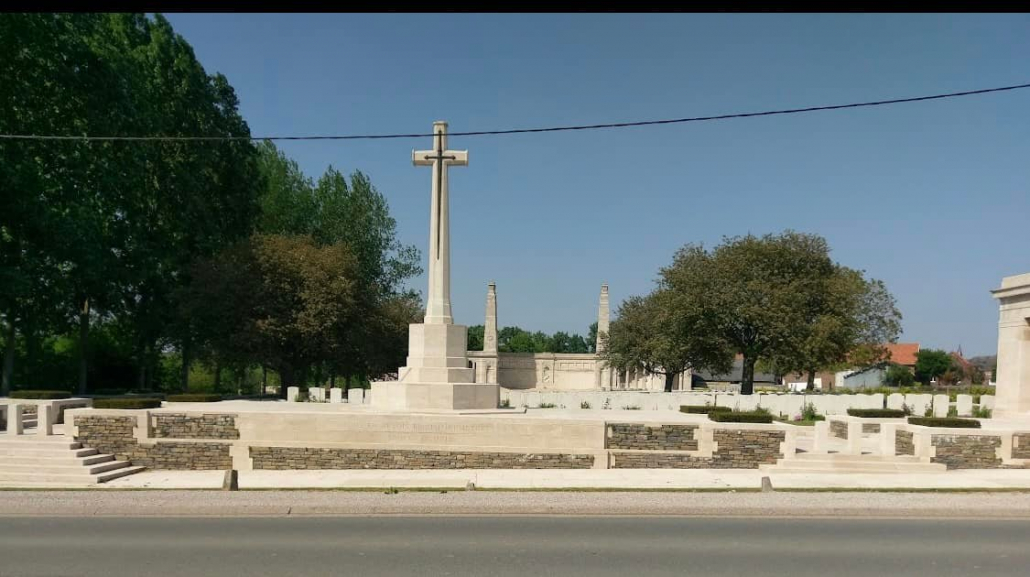
He has no known grave and his name is one of over 9,000 carved on the Memorial at Vis-en-Artois, who fell in the Picardy and Artois area, between 8 August and 11 November 1918, during what is known as ‘The Advance to Victory’.
Thanks to Alexis Threlfall and Helen Date for the information and photography
https://veteransontheedge.co.uk/wp-content/uploads/2026/02/EAB-Clark.jpg8181125Naylorj542http://veteransontheedge.co.uk/wp-content/uploads/2025/11/New-Logo-Small-300x284.pngNaylorj5422026-02-07 12:36:202026-02-07 12:36:25Ernest AB CLARK – Charfield
This research and story is thanks to Graham Adams from Woodlands Road, found in archived material.
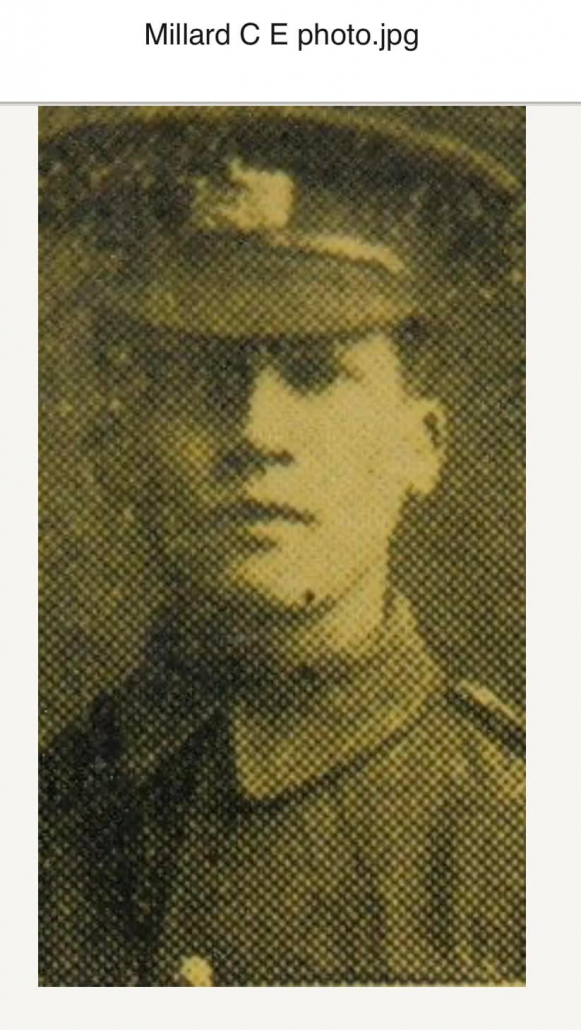
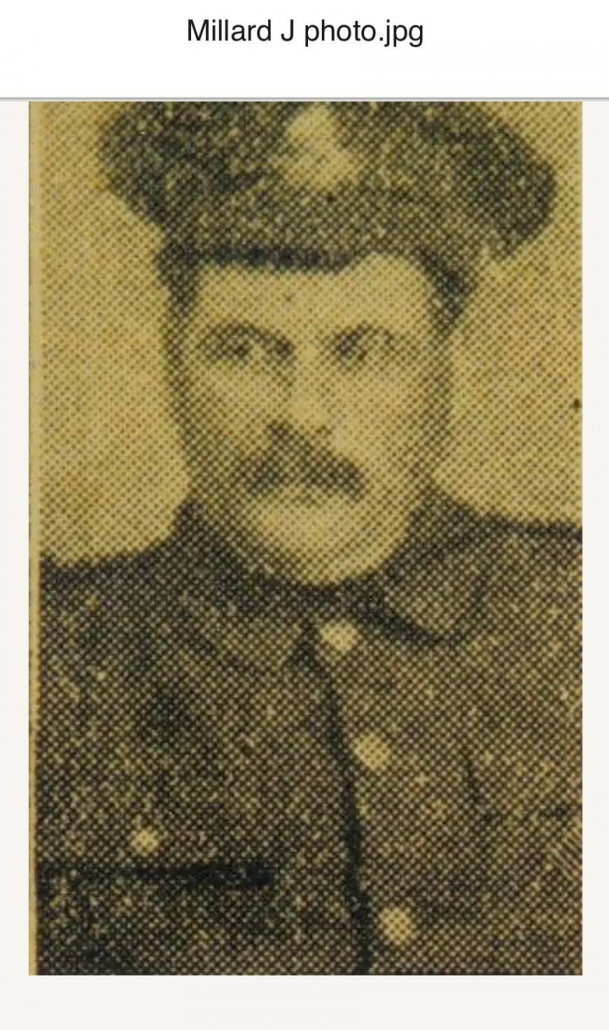
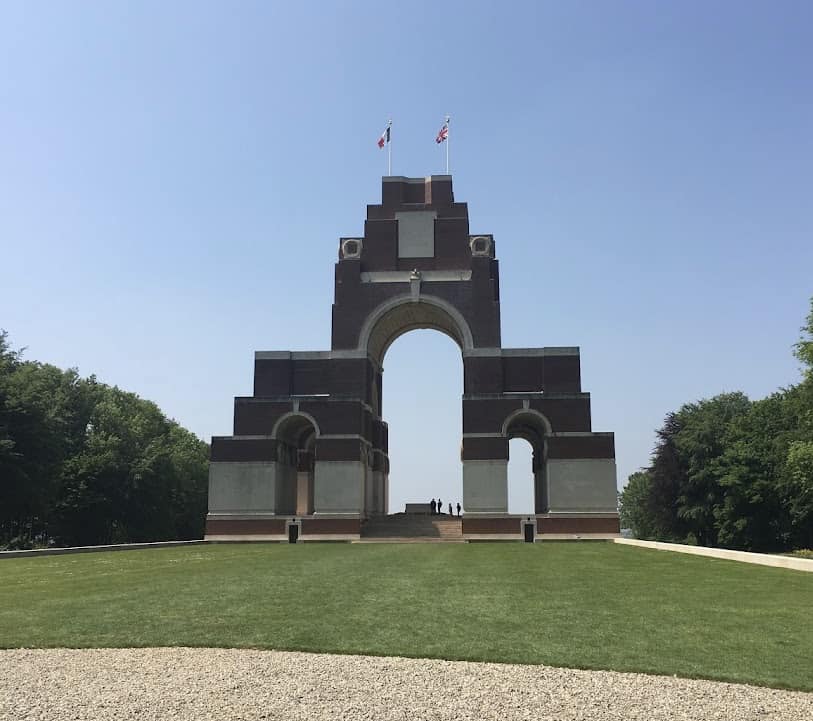
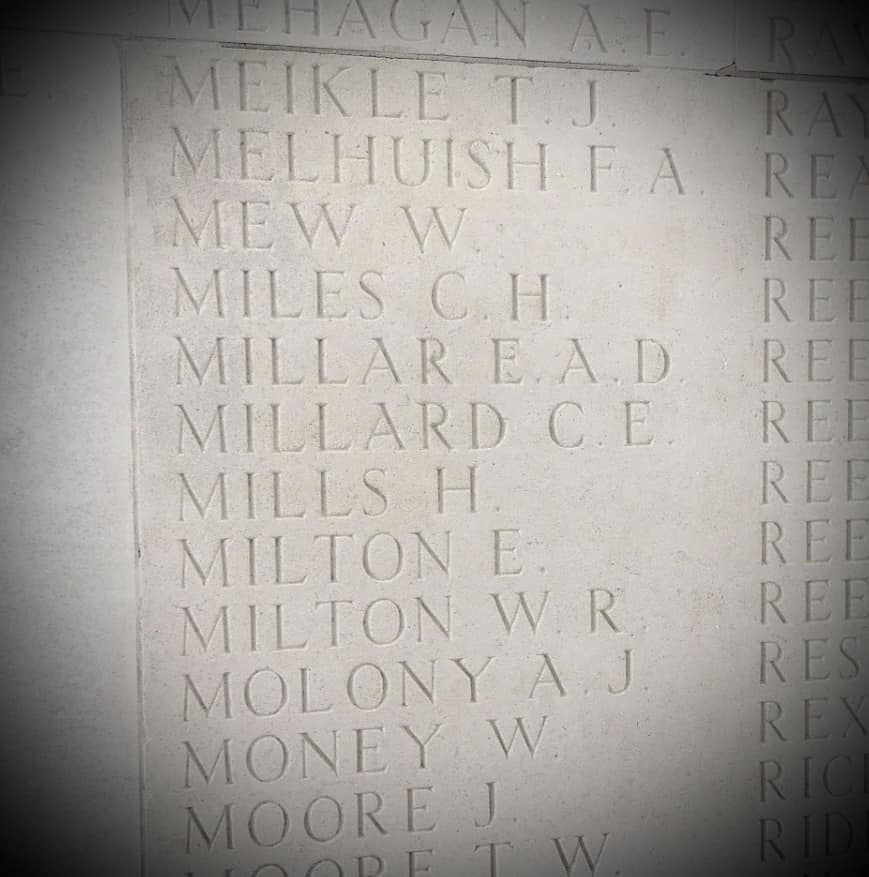
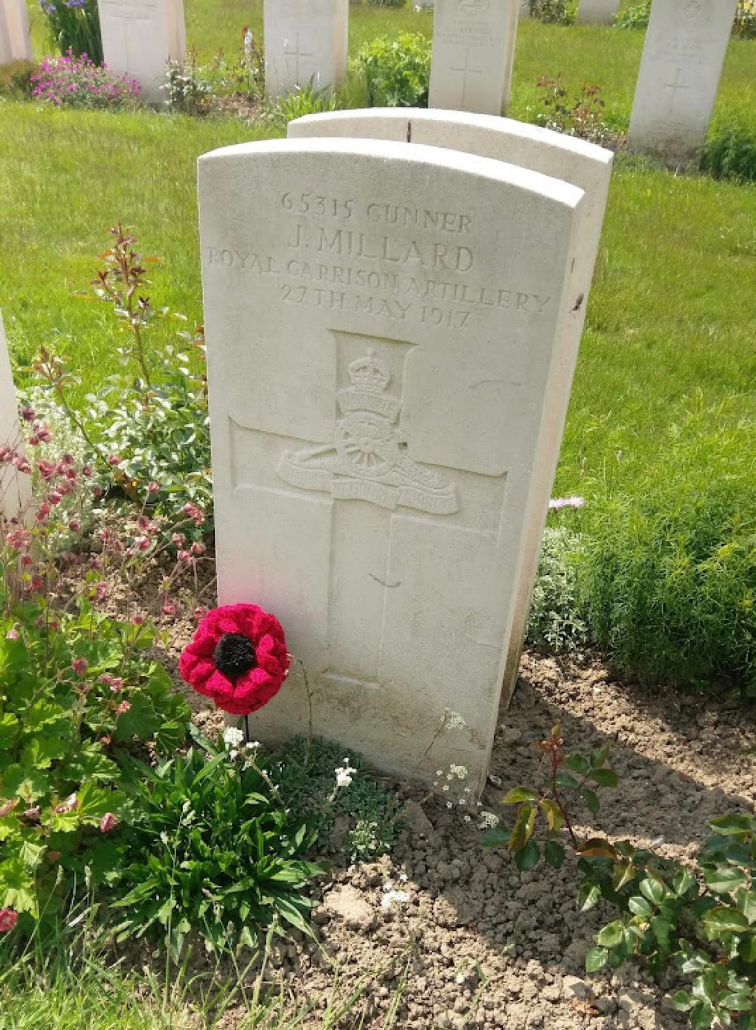
The MILLARD family of Mill Lane also lost two sons. The elder JOE, a 32-year-old gunner with heavy artillery got cramp when swimming in a river behind the lines on 26 May 1917 and drowned. A keen member of the Tytherington Football team, he had worked at the quarry. His 17-year-old brother CHARLES was wounded and went missing on 18 November 1916 after the long drawn out and bloody Battle of the Somme, whilst serving as Lewis gunner with the 8th Glosters. He was never seen again and officially presumed dead in March 1917. His name is now one of the 73,000 British soldiers from the Somme battles with no known grave, commemorated on the Thiepval Memorial.
It was not until almost the final day of the Battle that the Somme claimed a Charfield man.
On the night of 17 November 1916, the first snow of the winter had fallen over the Somme battlefield. As part of a Division whose job it was to reach the village of Grandcourt in the valley of the River Ancre below Thiepval, the 8th Battalion of the Gloucestershire Regiment went “over the top” at 6.10 the next morning into swirling sleet which soon turned to rain.
The ground was half frozen and, where it had thawed, soon turned into chalky slime; poor visibility hampered artillery support and prevented aerial reconnaissance. Pte Charles Millard, age 17, was one of a Lewis gun (a light machine gun) team with the Battalion. His unit had two objectives: to reach Grandcourt and dig in, and to mop up any German resistance in shell holes, dug-outs, and trenches.
The 8th Glosters, remarkably in the conditions, reached Grandcourt but were unable to stay there as units on their flank had not advanced sufficiently, leaving them exposed. The mopping-up parties had a hard time suppressing fierce German machine gun fire. Somewhere in the mud and slime of the shell-torn ground, Pte Millard met his death. Initially, he was reported wounded and missing and it was not until March 1917 that his non-appearance 11and lack of reported capture led to the conclusion that he was one of the last to die on the Somme in 1916. No grave was ever found and, if you visit Thiepval, you will find his name amongst the vast columns which record those of over 73,000 who fell in the Battle and similarly disappeared.
Having received confirmation of Charles’s death, Mr and Mrs Thomas Millard were soon to receive the tragic news that another of their eleven children had died in the War. Joseph, age 32, had left his job at Tytherington Quarry to join the 31 Heavy Artillery Battery of the Royal Garrison Artillery, which was responsible for the large guns on the Western Front. On 26 May 1917, taking time off from duties as battalion cook, he went for a swim in a river near Armentieres. It is believed that, with the onset of cramps, he got into difficulties and drowned. He was buried locally.
Thanks to Alexis Threlfall and Helen Date for the photographs and images.
https://veteransontheedge.co.uk/wp-content/uploads/2026/02/C-Millard-3.jpg1459823Naylorj542http://veteransontheedge.co.uk/wp-content/uploads/2025/11/New-Logo-Small-300x284.pngNaylorj5422026-02-07 12:29:312026-02-07 12:31:49Joe and Charles MILLARD – Charfield
178447 Leading Seaman Francis George NEAL Royal Navy – HMS Monmouth
Drowned at sea in action on 1 November 1914, aged 37. One of all 738 sailors of the ships company died that day.
Probably known in the family as George, Francis George Neal was born at Tortworth on 17 December 1877: his parents were John and Ann Neal.
George joined the Royal Navy on 21 February 1894 and was posted to HMS Impregnable. He went on to serve in a variety of the Navy’s ships and reached the rank of Leading Seaman on 9 April 1905.
On 27 December 1909, he married Jane Ellen Merrett at St John the Evangelist Church, Charfield, whilst serving on HMS Cumberland. On 15 February 1911, he left the Navy to join the Coast Guard service, becoming a lighthouse keeper at Padstow, Cornwall. This carried the rank of ‘Leading Boatman, Coast Guard’. The 1911 Census show him living with Jane in the Coastguard Station at Padstow.
He was no doubt still a naval reservist and with war looking certain he was recalled to the service on 1 August 1914 and posted to HMS Monmouth, an armoured cruiser, completed in 1903, of which he served previously.
On 1 November 1914, Monmouth was part of a Royal Navy squadron, under the command of Sir Christopher Craddock, which encountered the superior force of the German East Asiatic Squadron, commanded by Vice Admiral Maximilian Graf von Spee, of Coronel, Chile.
In what became known as The Battle of Coronel, the British lost two Armoured Cruisers; Cradock’s flagship HMS Good Hope and Monmouth.
Craddock and 1600 other officers and men were killed in action or went down with their ship. Leading Seaman George Neal was one of them. His body was never found and he is commemorated on the Plymouth Naval Memorial.
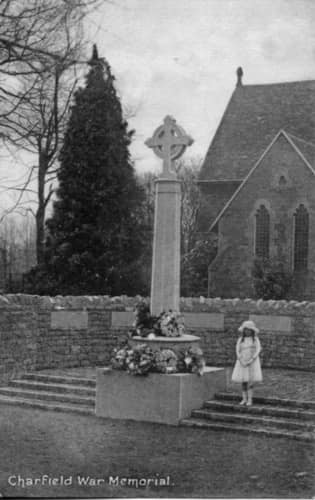
Six years later, at 2.45 pm on 28th February 1920, the formal dedication of the Charfield memorial took place.
A large crowd gathered. Amongst it were many relatives of the fallen, who were later to place floral tributes.
Over the Cross was draped a large Union Flag and the task of removing this was given to Frances Beatrice Neal, the only child of the village rendered fatherless by the War.
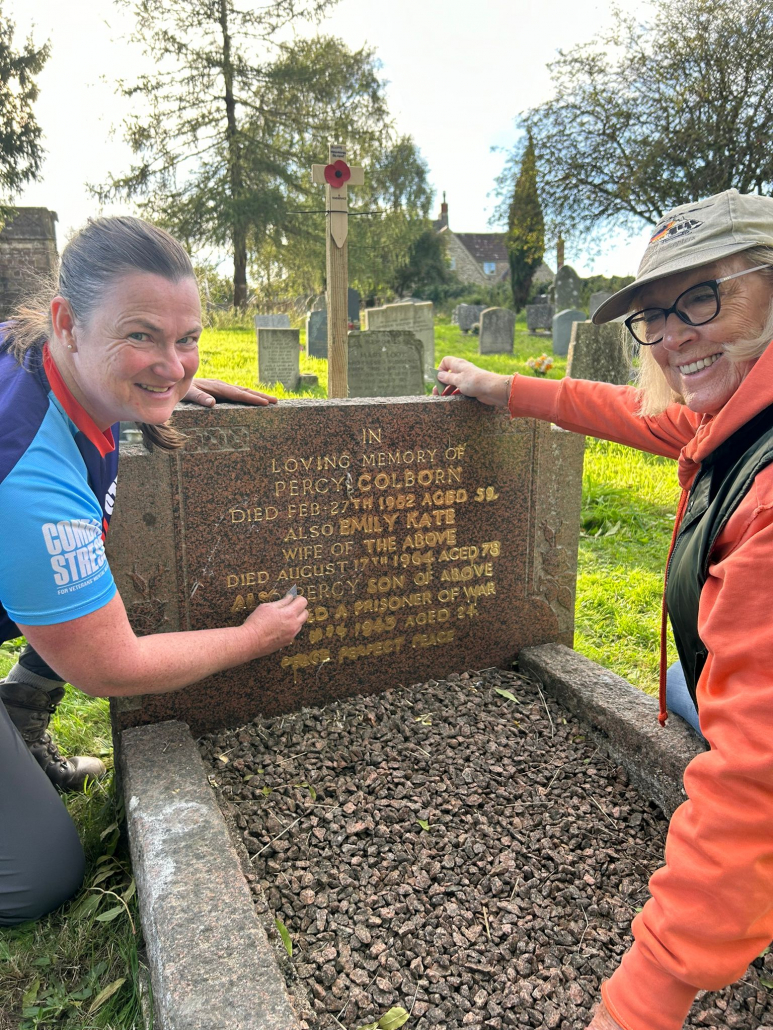
511144 or 1311144, Gunner Percy William George Colborn, 85th Anti Tank Regiment, Royal Artillery
Died as a Prisoner of War on the building of the Burma Railway, aged 24, 11th September 1942
Buried/Commemorated at Chungkai War Cemetery, Thailand and commemorated on Charfield War memorial
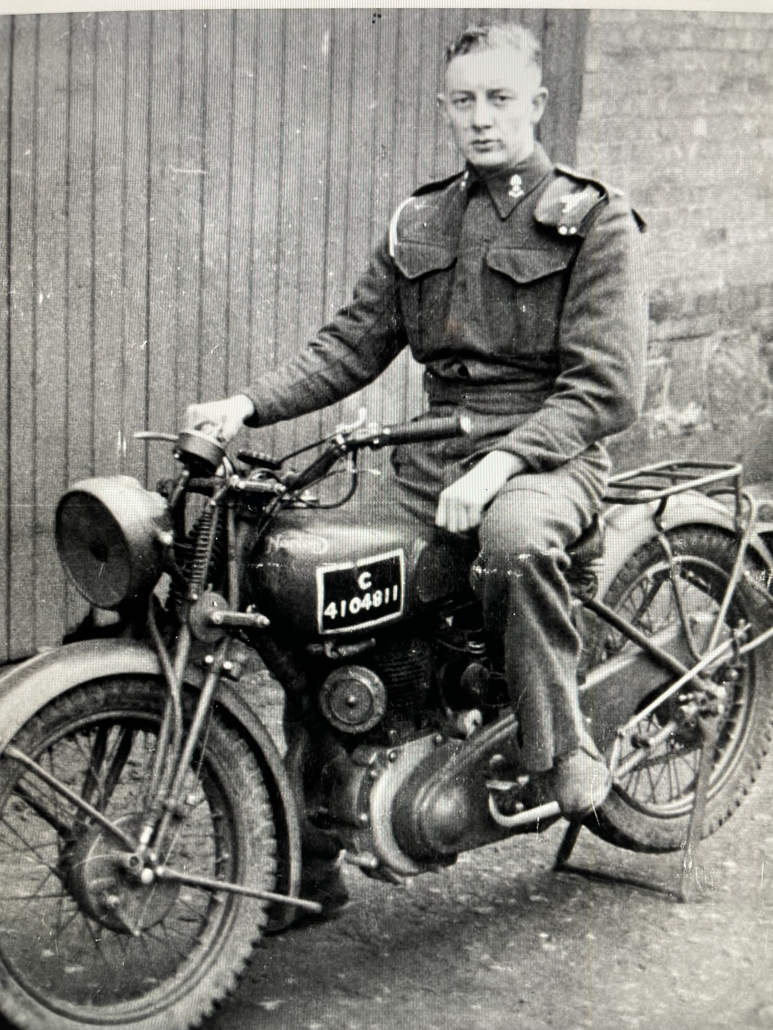
Percy’s father was a tile worker and he lived with his parents, Percy and Emily Kate at 2 Station Road, Charfield. Percy senior may have served in the Army a child solder, as evidence by the photographer shared by the family, before then again signing up for WW1 later in life.
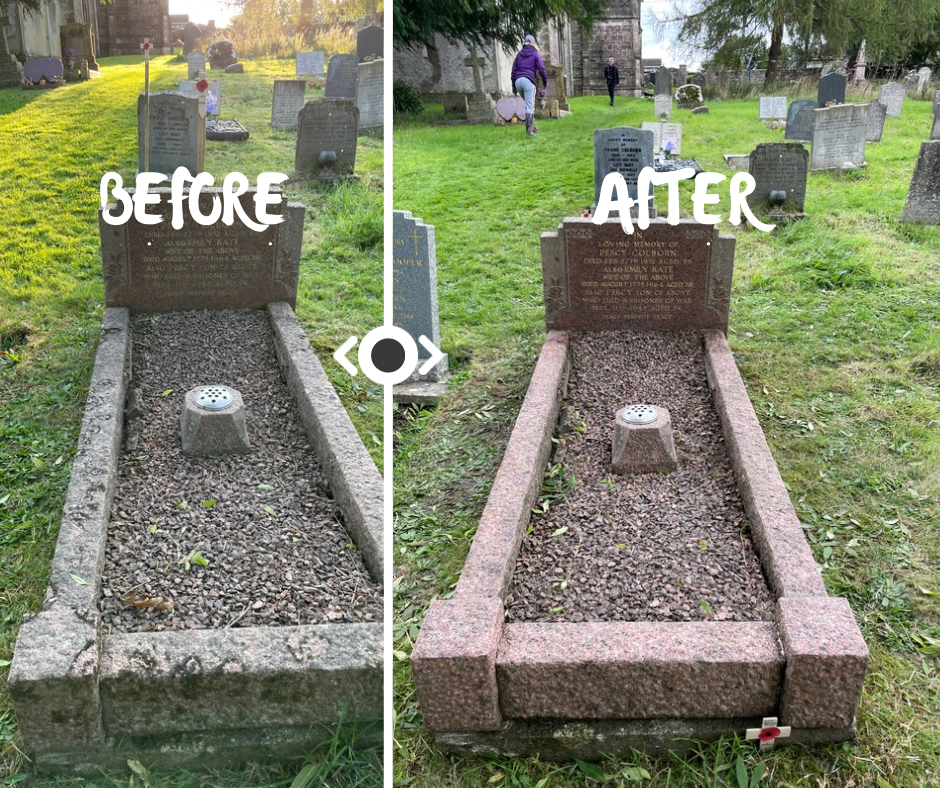
Army Veteran, Jenny Naylor, and former service spouse, Sue Purslow, refurbish Percy’s memorial headstoneGunner P Colborn WW2
Young Percy served in the Malayan Theatre of War and was captured and held at Chungkai POW camp Malai 3. Percy was one of many soldiers who perished from abuse, disease or malnutrition whilst working on the infamous Thai/Burma Railway, constructed during 1942/43. His records indicate that he died from a throat infection. He left his estate to his mother Emily Kate Colborn.
Pte Percy Colborn poss Pre WW1
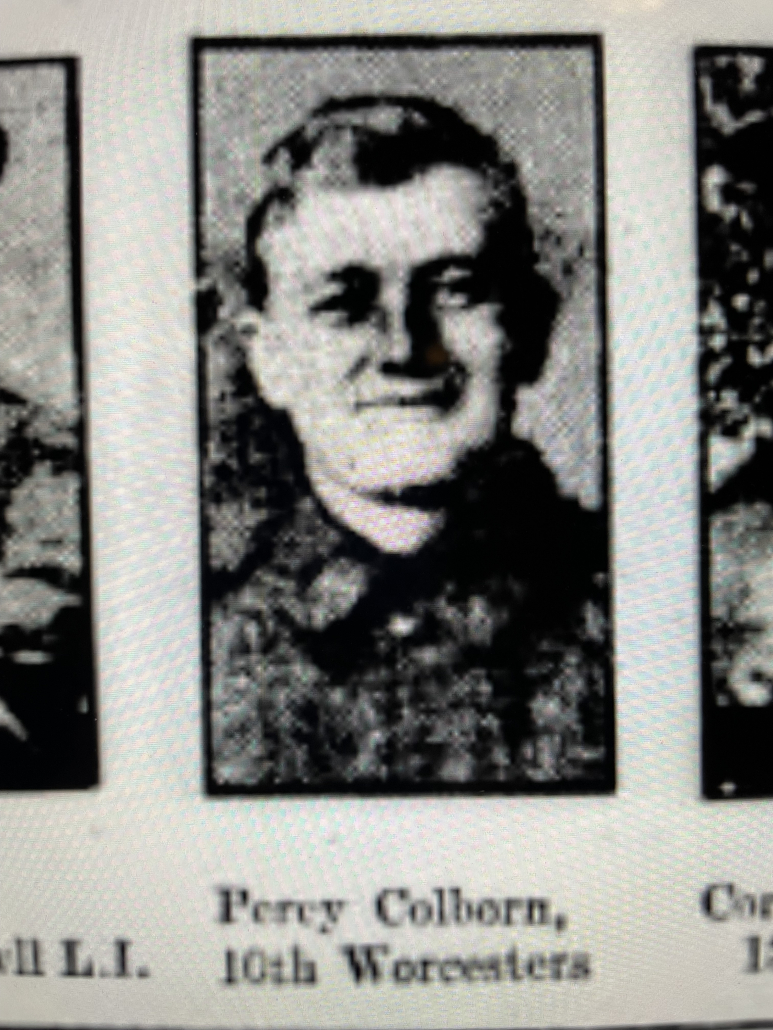
As mentioned previously Percy’s father, also Percy, served in WW1 and was in the 10th Worcesters, his service number was possibly 18640 before changing to 508030 the he transferred to the Labour Corps later in the war.
Percy was one of four brothers who fought in WW1. You can read more about George, Frank and William in other posts on the page.
https://veteransontheedge.co.uk/wp-content/uploads/2026/01/Unknown.jpg1024702Naylorj542http://veteransontheedge.co.uk/wp-content/uploads/2025/11/New-Logo-Small-300x284.pngNaylorj5422026-01-11 15:34:322026-01-11 16:08:36Percy COLBORN, Father and Son, – Charfield