
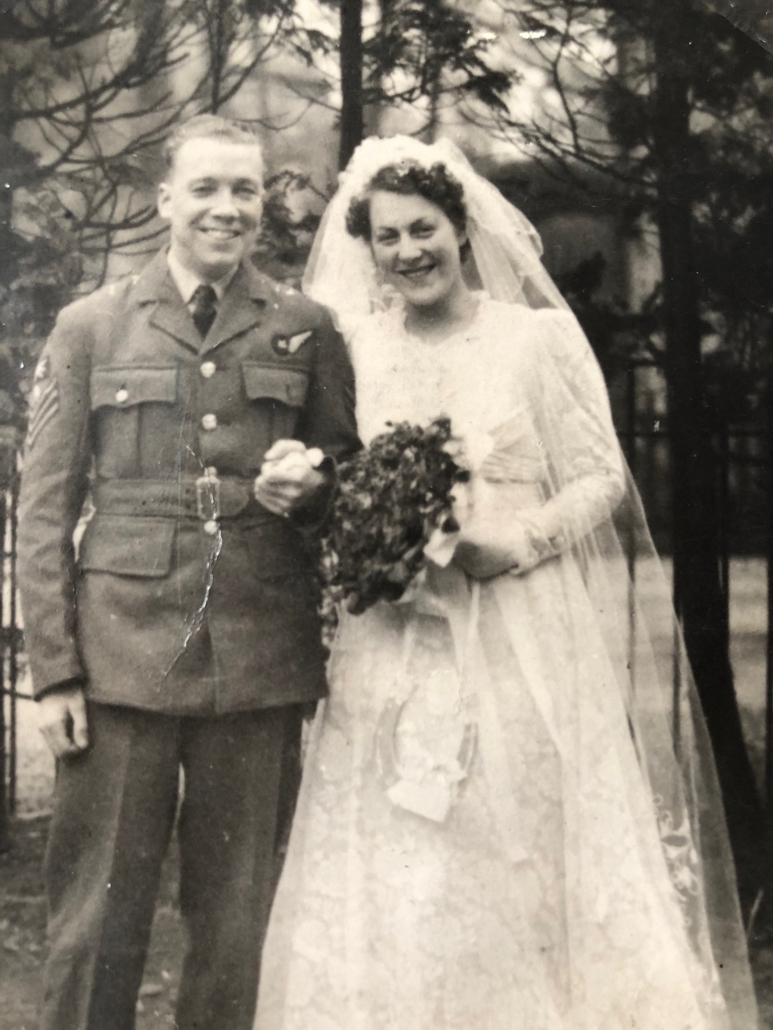
Herbert Percy DAVIS, Charfield
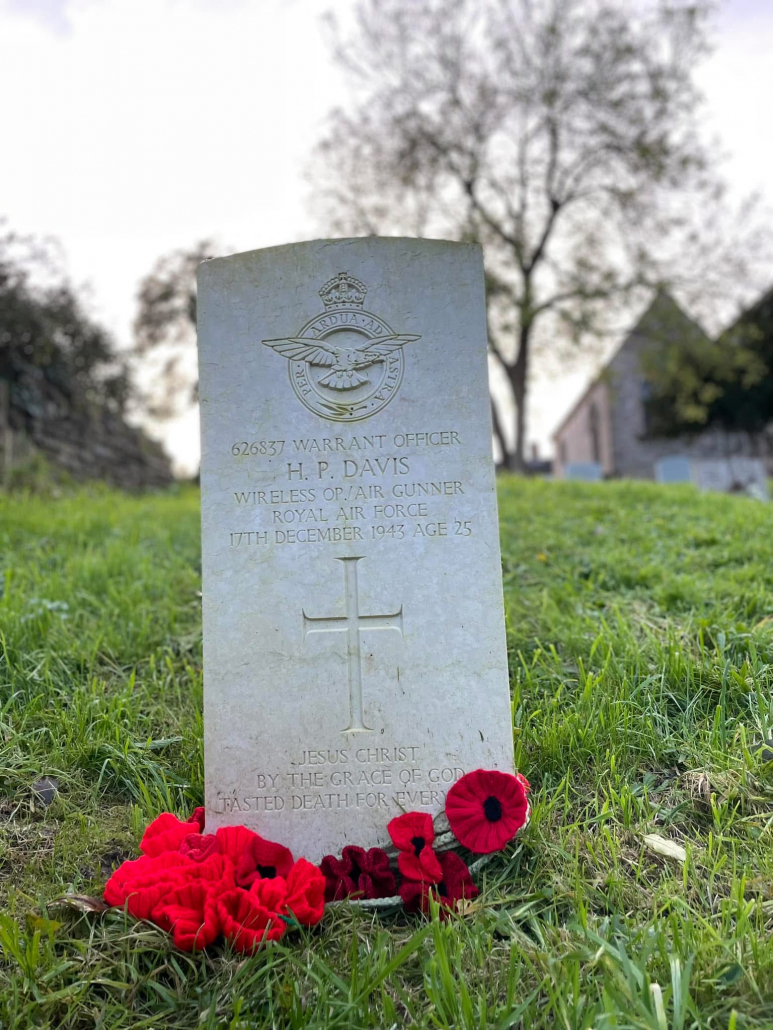
In contrast, the grave of Herbert Percy Davis is prominent, facing the well known memorial to victims of the 1928 train crash. WO Davis the son of Herbert and Emily of Mill Yard, joined the RAF in 1938, having formerly worked at Charfield Mill as a printer.
In December 1943, he was serving with 101 Squadron, Bomber Command, based at Ludford Magna, Lincolnshire, as a Wireless Operator on Lancasters. In the late afternoon of 16th December 1943, WO Davis’ Lancaster took off to join nearly five hundred others on an operation to bomb Berlin. This raid was one of a series, from August 1943 to March 1944, intended to destroy the German capital and bringing to an end the war.
The Lancaster in which he flew was unusual. It was known as an ‘Airborne Cigar’ or ABC aircraft. In addition to a normal bomb load it carried three wireless transmitters and an additional German speaking crew member, whose job it was to jam and confuse the Luftwaffe night fighter controllers’ instructions. Flying a direct route via Holland the Lancaster delivered its load on Berlin before returning via Denmark, having successfully escaped the attentions of the German defences.
On arriving over England just before midnight, the returning crews found that low cloud had descended over their home airfields. Ground controllers struggled to talk the aircraft down and advised the pilots to land where they could. The problem was that the nearest clear airfields were in Scotland or the West of England and most aircraft did not have sufficient fuel to reach there. WO Davis’ Lancaster flew west searching for a place to land. Shortly after midnight the pilot reported he was low on fuel. He attempted to bring the aircraft down below the cloud and at twenty seven minutes past midnight it crashed into high ground at Eastington in the Cotswolds. Possibly it was hoping to land at the nearby Little Rissington airfield.
Of the eight man crew, only the mid-upper and Rear Gunners survived. Herbert Davis’ funeral was held on 23rd December 1943. He was 25 years old when he died and married to Joan, who came from Middlewich in Cheshire.
The 16th and 17th December 1943 was the worst night of the Second World War for Bomber Command, in terms of aircraft lost over England. Twenty eight crashed that night and four were abandoned by their crews, compared with twenty five lost over Germany. The cloud over England claimed one hundred and twenty seven lives.
Leave a Reply
Want to join the discussion?Feel free to contribute!