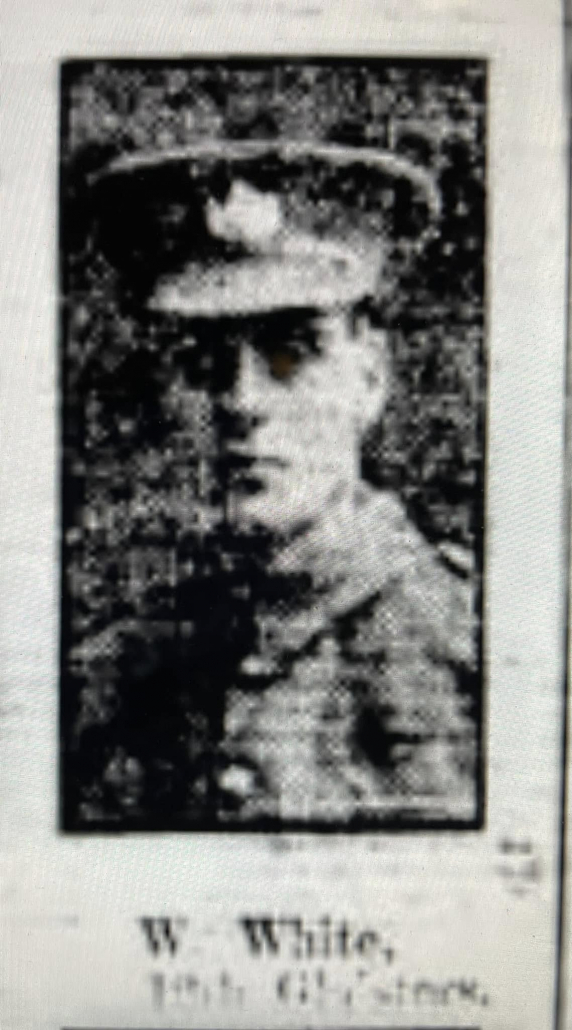
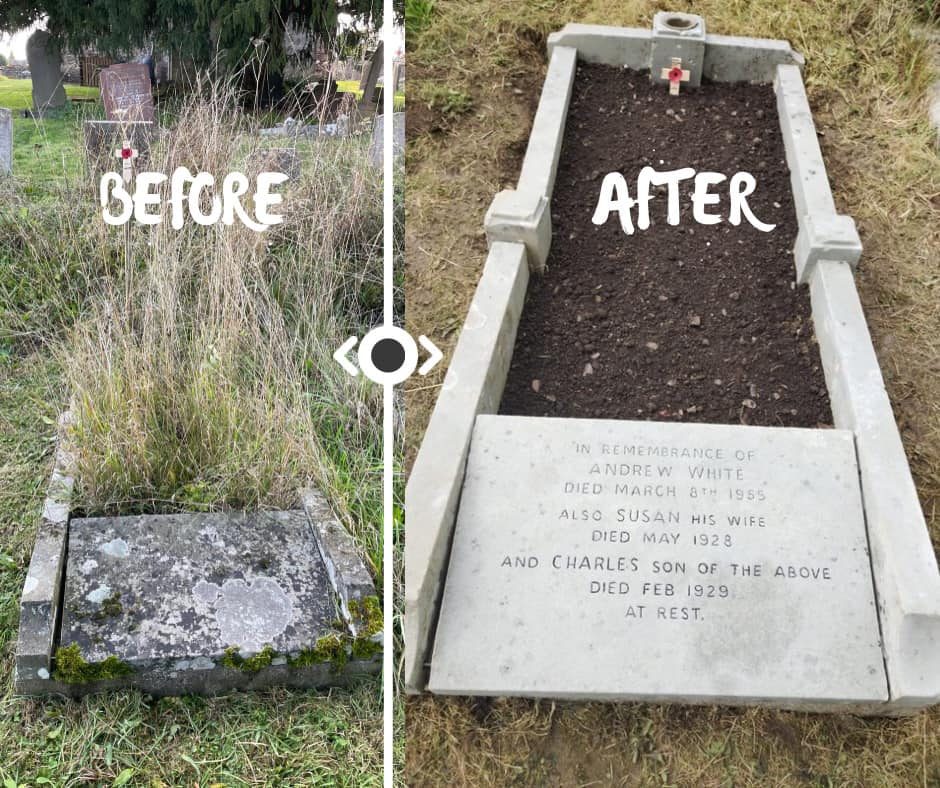
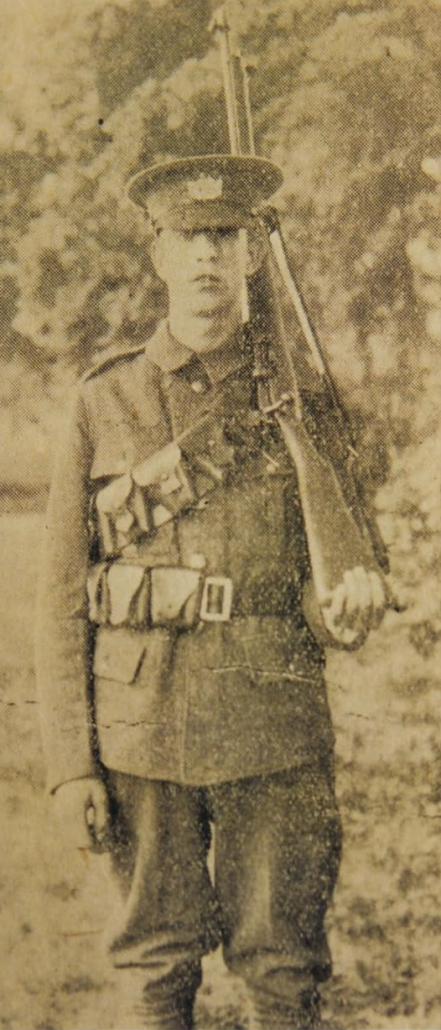
https://veteransontheedge.co.uk/wp-content/uploads/2026/02/A-White.jpg20481138Naylorj542http://veteransontheedge.co.uk/wp-content/uploads/2025/11/New-Logo-Small-300x284.pngNaylorj5422026-02-07 12:51:152026-02-07 12:51:19Andrew W WHITE – Charfield
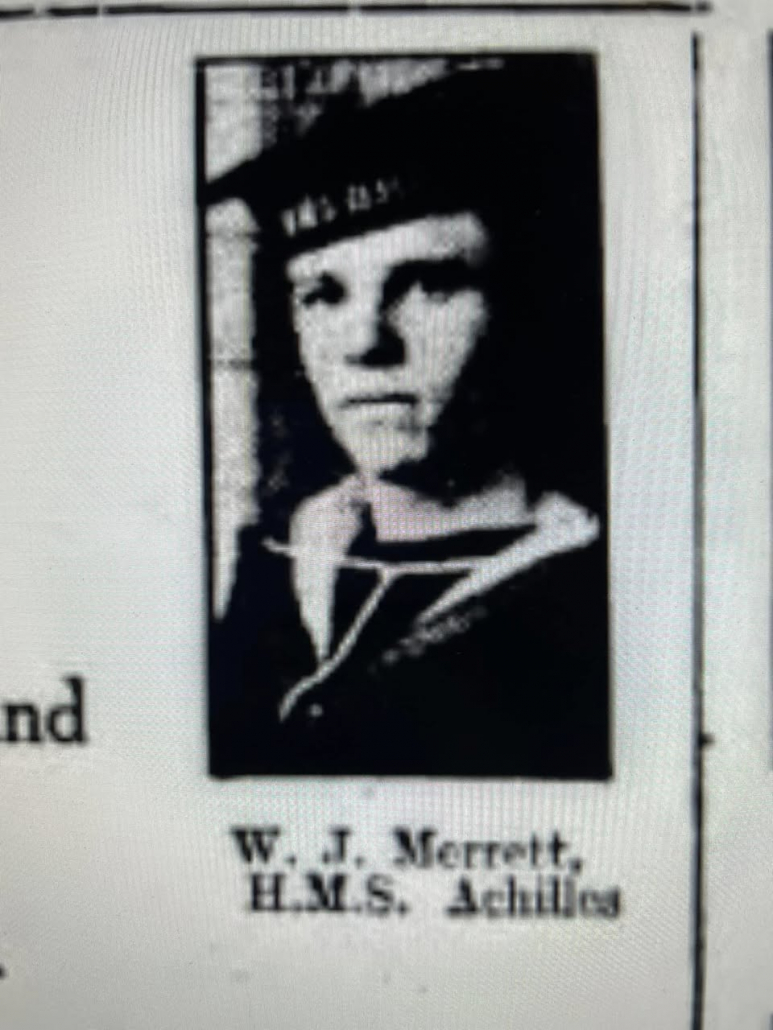
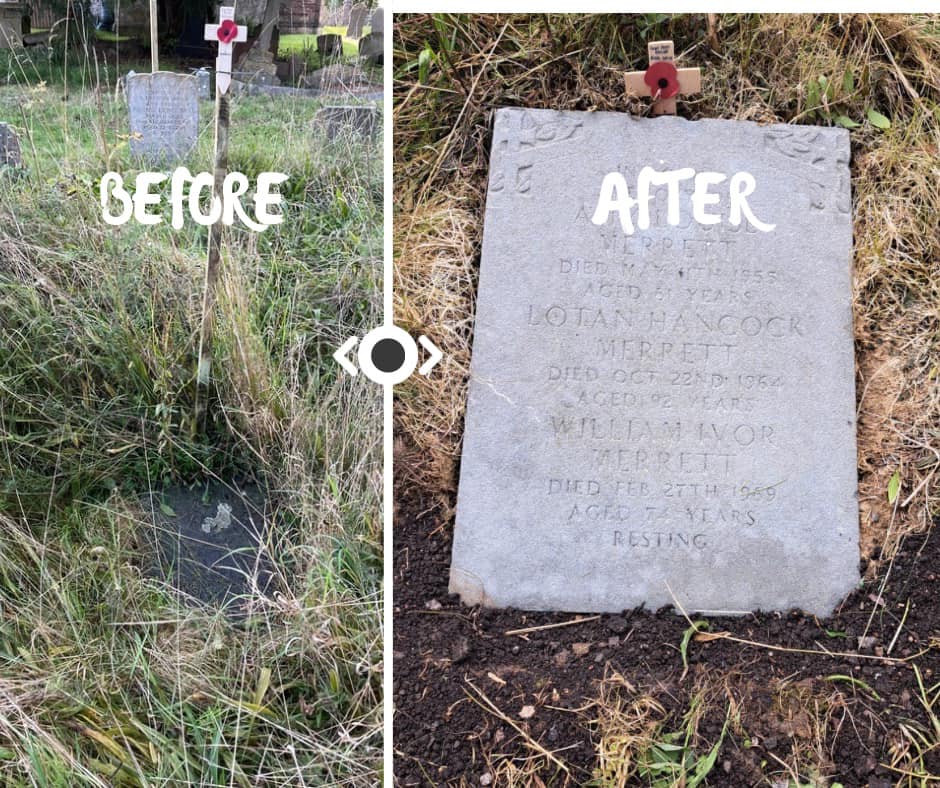
William Ivor Merrett enlisted in the Royal Navy in 1929 and was a Cheif Petty Officer by the time he left. Serving in many ships such as HMS Achilles and the Victory. He was awarded the Long Service and Good conduct Medal as well and the Kings Sulver Jubilee Medal and his record show exemplary conduct throughout.
His grave is located in the St James Churchend, Charfield, closed graveyard and was restored by Pete who is a Royal Navy veteran himself.
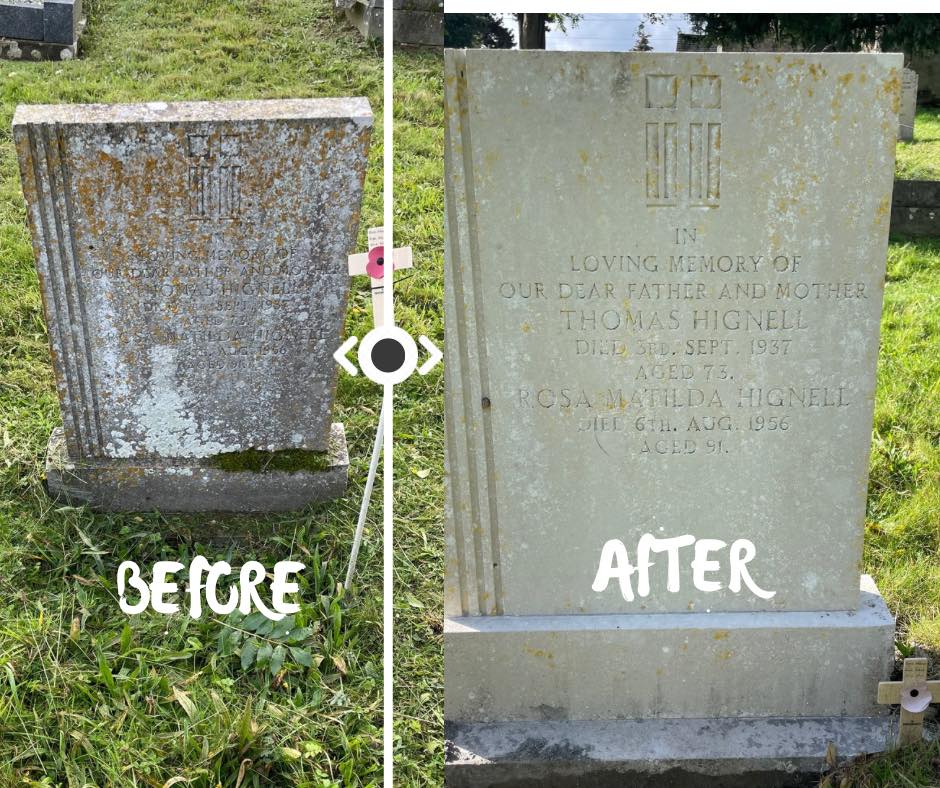
Thomas Theophilus George Hignell Died 1937 aged 73
Thomas was a Boer War veteran, enlisting into the Royal Marines in 1881. Not much more could be found out about Thomas but he was the local Ironmonger in Charfield in 1925.
This grave, which is in the old churchyard at St James’s Churchend, Charfield, was restored by fellow Navy Veteran, Pete.
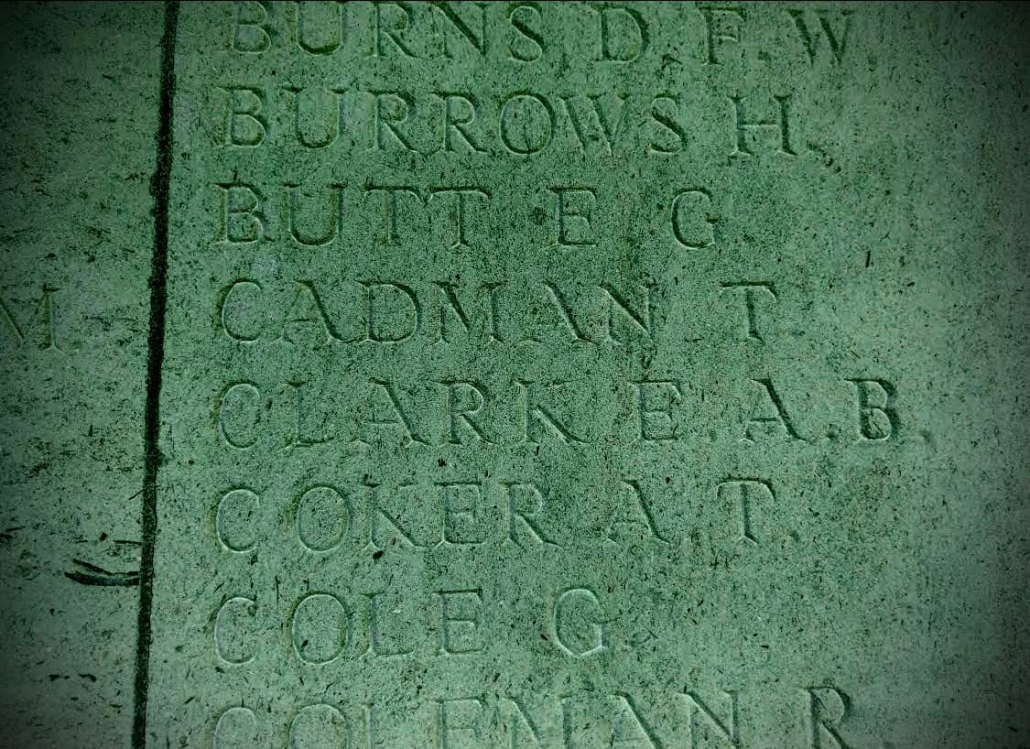
No Known Grave – commemorated on the Vis-en-Artois Memorial to the Missing Ernest Clark was born in early 1899 at Charfield. He was one of two sons and a daughter born to Ernest S T and Annie Alice Clark of Mill Road, Charfield.
Prior to enlisting in the Army, he worked as a railway employee at Berkeley Road Station.
Unfortunately, no Army Service record has survived for Pte. Clark but his Army number indicates that he probably enlisted in early 1916 and would have served in the UK until reaching the age of 19, when he could be sent abroad.
He was killed in action on 30 August 1918, when aged 19. According to a letter sent by one of his comrades to his father, death was the result of a shell falling on a trench at Monchy-le-Preux, which is near Arras, France.
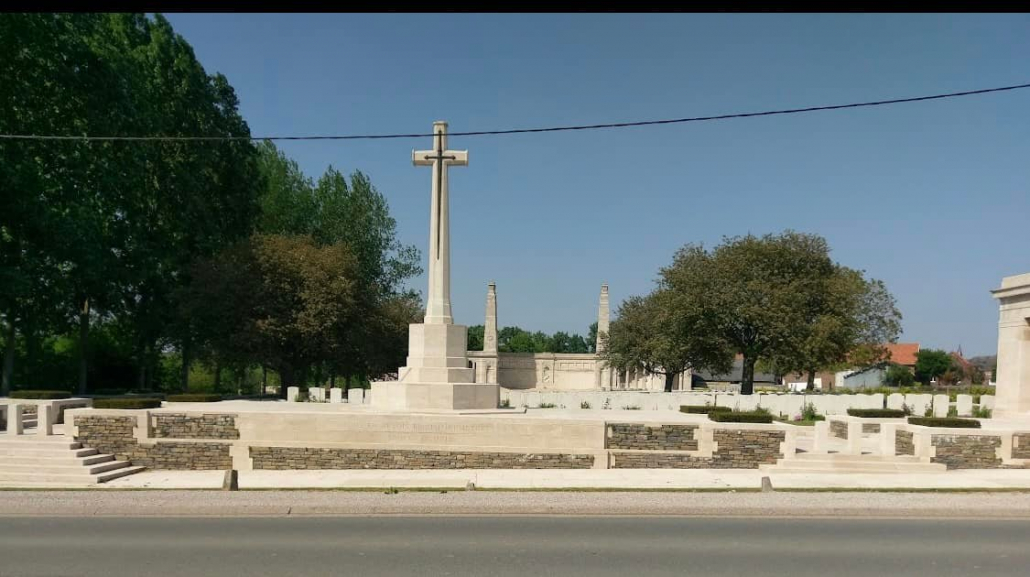
He has no known grave and his name is one of over 9,000 carved on the Memorial at Vis-en-Artois, who fell in the Picardy and Artois area, between 8 August and 11 November 1918, during what is known as ‘The Advance to Victory’.
Thanks to Alexis Threlfall and Helen Date for the information and photography
https://veteransontheedge.co.uk/wp-content/uploads/2026/02/EAB-Clark.jpg8181125Naylorj542http://veteransontheedge.co.uk/wp-content/uploads/2025/11/New-Logo-Small-300x284.pngNaylorj5422026-02-07 12:36:202026-02-07 12:36:25Ernest AB CLARK – Charfield
This research and story is thanks to Graham Adams from Woodlands Road, found in archived material.
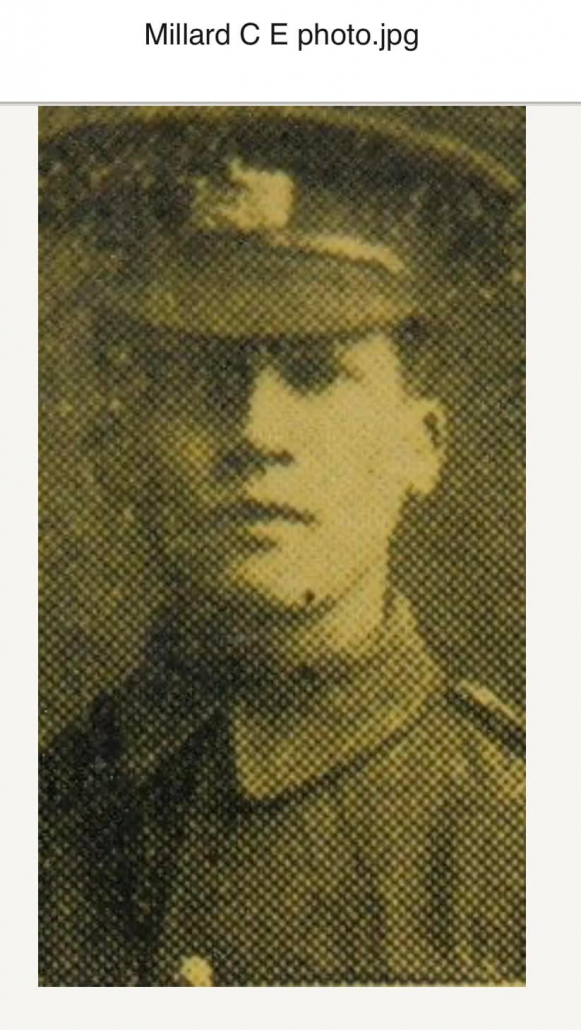
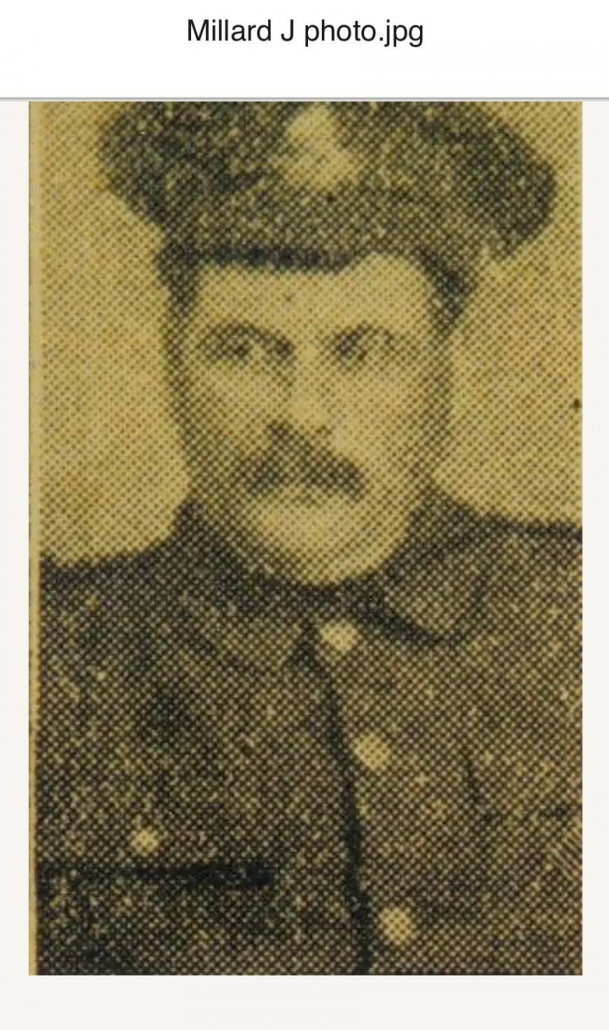
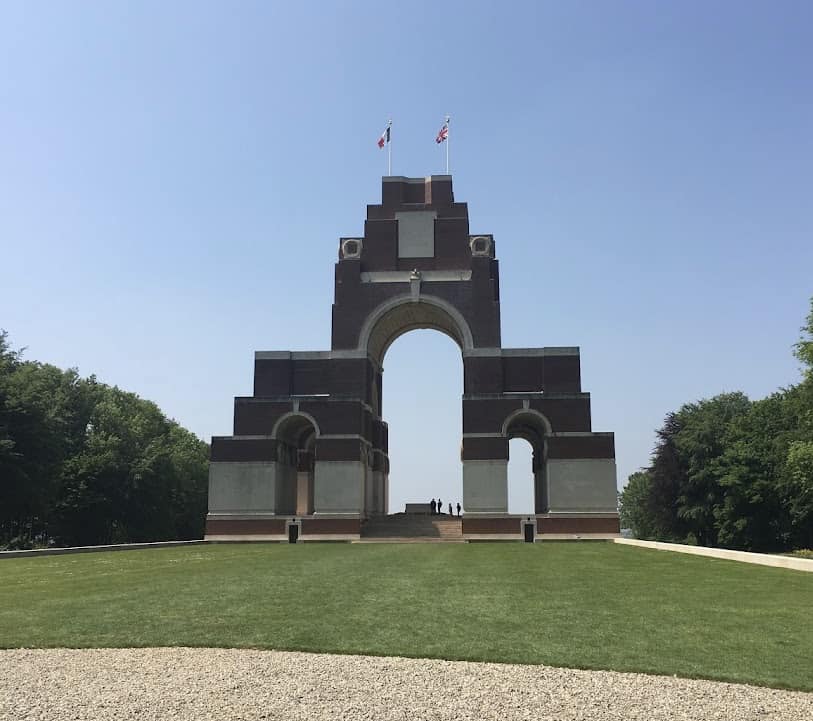
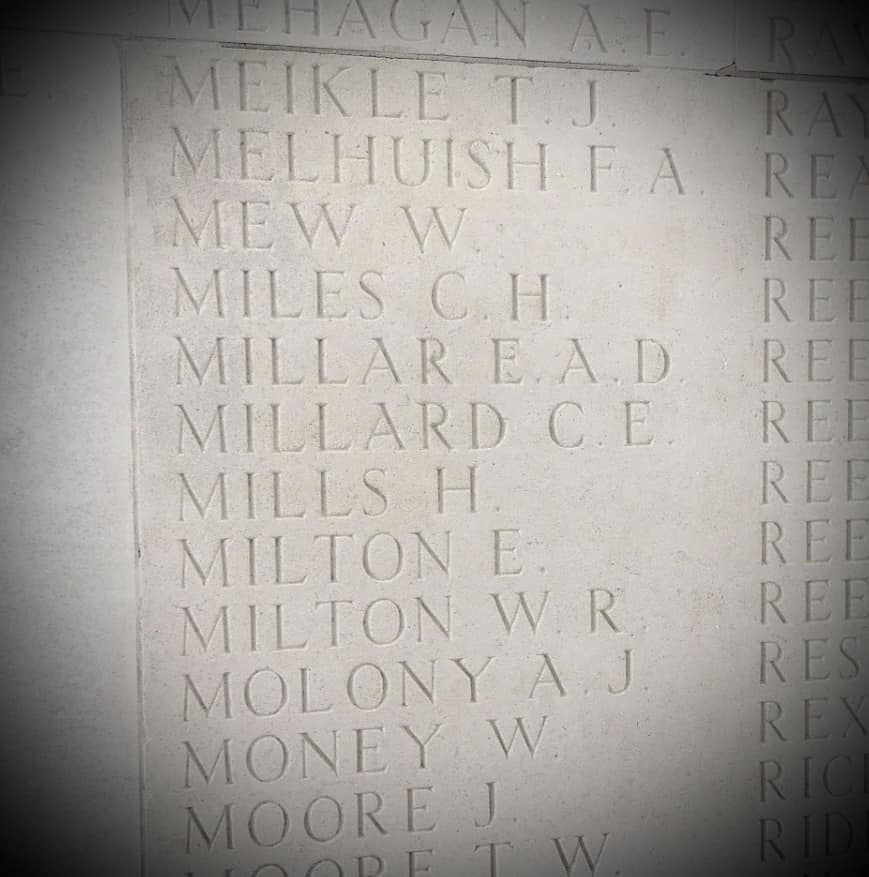
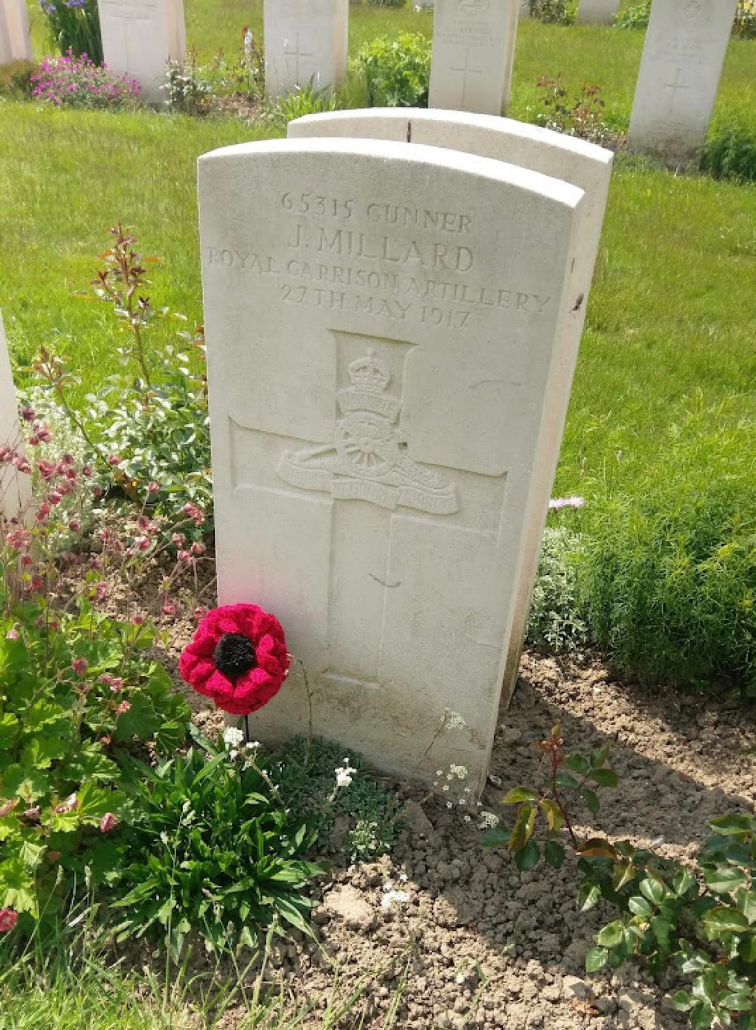
The MILLARD family of Mill Lane also lost two sons. The elder JOE, a 32-year-old gunner with heavy artillery got cramp when swimming in a river behind the lines on 26 May 1917 and drowned. A keen member of the Tytherington Football team, he had worked at the quarry. His 17-year-old brother CHARLES was wounded and went missing on 18 November 1916 after the long drawn out and bloody Battle of the Somme, whilst serving as Lewis gunner with the 8th Glosters. He was never seen again and officially presumed dead in March 1917. His name is now one of the 73,000 British soldiers from the Somme battles with no known grave, commemorated on the Thiepval Memorial.
It was not until almost the final day of the Battle that the Somme claimed a Charfield man.
On the night of 17 November 1916, the first snow of the winter had fallen over the Somme battlefield. As part of a Division whose job it was to reach the village of Grandcourt in the valley of the River Ancre below Thiepval, the 8th Battalion of the Gloucestershire Regiment went “over the top” at 6.10 the next morning into swirling sleet which soon turned to rain.
The ground was half frozen and, where it had thawed, soon turned into chalky slime; poor visibility hampered artillery support and prevented aerial reconnaissance. Pte Charles Millard, age 17, was one of a Lewis gun (a light machine gun) team with the Battalion. His unit had two objectives: to reach Grandcourt and dig in, and to mop up any German resistance in shell holes, dug-outs, and trenches.
The 8th Glosters, remarkably in the conditions, reached Grandcourt but were unable to stay there as units on their flank had not advanced sufficiently, leaving them exposed. The mopping-up parties had a hard time suppressing fierce German machine gun fire. Somewhere in the mud and slime of the shell-torn ground, Pte Millard met his death. Initially, he was reported wounded and missing and it was not until March 1917 that his non-appearance 11and lack of reported capture led to the conclusion that he was one of the last to die on the Somme in 1916. No grave was ever found and, if you visit Thiepval, you will find his name amongst the vast columns which record those of over 73,000 who fell in the Battle and similarly disappeared.
Having received confirmation of Charles’s death, Mr and Mrs Thomas Millard were soon to receive the tragic news that another of their eleven children had died in the War. Joseph, age 32, had left his job at Tytherington Quarry to join the 31 Heavy Artillery Battery of the Royal Garrison Artillery, which was responsible for the large guns on the Western Front. On 26 May 1917, taking time off from duties as battalion cook, he went for a swim in a river near Armentieres. It is believed that, with the onset of cramps, he got into difficulties and drowned. He was buried locally.
Thanks to Alexis Threlfall and Helen Date for the photographs and images.
https://veteransontheedge.co.uk/wp-content/uploads/2026/02/C-Millard-3.jpg1459823Naylorj542http://veteransontheedge.co.uk/wp-content/uploads/2025/11/New-Logo-Small-300x284.pngNaylorj5422026-02-07 12:29:312026-02-07 12:31:49Joe and Charles MILLARD – Charfield
178447 Leading Seaman Francis George NEAL Royal Navy – HMS Monmouth
Drowned at sea in action on 1 November 1914, aged 37. One of all 738 sailors of the ships company died that day.
Probably known in the family as George, Francis George Neal was born at Tortworth on 17 December 1877: his parents were John and Ann Neal.
George joined the Royal Navy on 21 February 1894 and was posted to HMS Impregnable. He went on to serve in a variety of the Navy’s ships and reached the rank of Leading Seaman on 9 April 1905.
On 27 December 1909, he married Jane Ellen Merrett at St John the Evangelist Church, Charfield, whilst serving on HMS Cumberland. On 15 February 1911, he left the Navy to join the Coast Guard service, becoming a lighthouse keeper at Padstow, Cornwall. This carried the rank of ‘Leading Boatman, Coast Guard’. The 1911 Census show him living with Jane in the Coastguard Station at Padstow.
He was no doubt still a naval reservist and with war looking certain he was recalled to the service on 1 August 1914 and posted to HMS Monmouth, an armoured cruiser, completed in 1903, of which he served previously.
On 1 November 1914, Monmouth was part of a Royal Navy squadron, under the command of Sir Christopher Craddock, which encountered the superior force of the German East Asiatic Squadron, commanded by Vice Admiral Maximilian Graf von Spee, of Coronel, Chile.
In what became known as The Battle of Coronel, the British lost two Armoured Cruisers; Cradock’s flagship HMS Good Hope and Monmouth.
Craddock and 1600 other officers and men were killed in action or went down with their ship. Leading Seaman George Neal was one of them. His body was never found and he is commemorated on the Plymouth Naval Memorial.
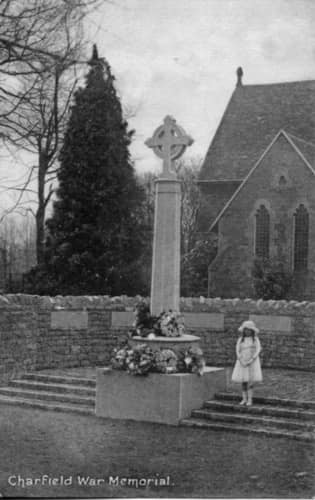
Six years later, at 2.45 pm on 28th February 1920, the formal dedication of the Charfield memorial took place.
A large crowd gathered. Amongst it were many relatives of the fallen, who were later to place floral tributes.
Over the Cross was draped a large Union Flag and the task of removing this was given to Frances Beatrice Neal, the only child of the village rendered fatherless by the War.
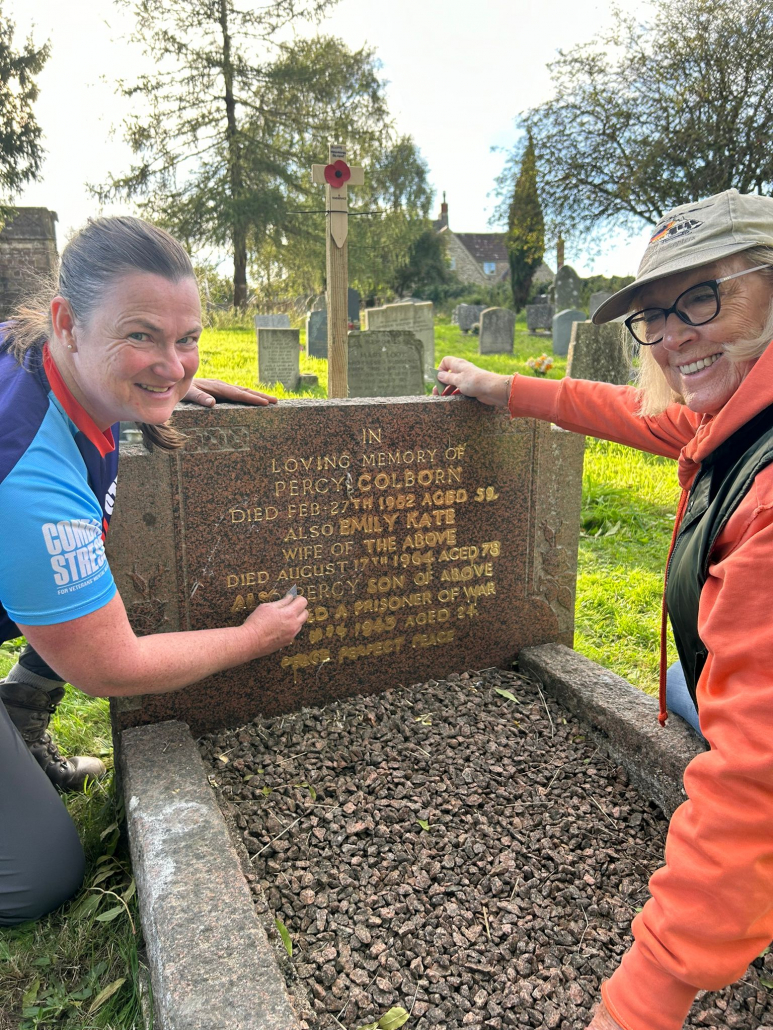
511144 or 1311144, Gunner Percy William George Colborn, 85th Anti Tank Regiment, Royal Artillery
Died as a Prisoner of War on the building of the Burma Railway, aged 24, 11th September 1942
Buried/Commemorated at Chungkai War Cemetery, Thailand and commemorated on Charfield War memorial
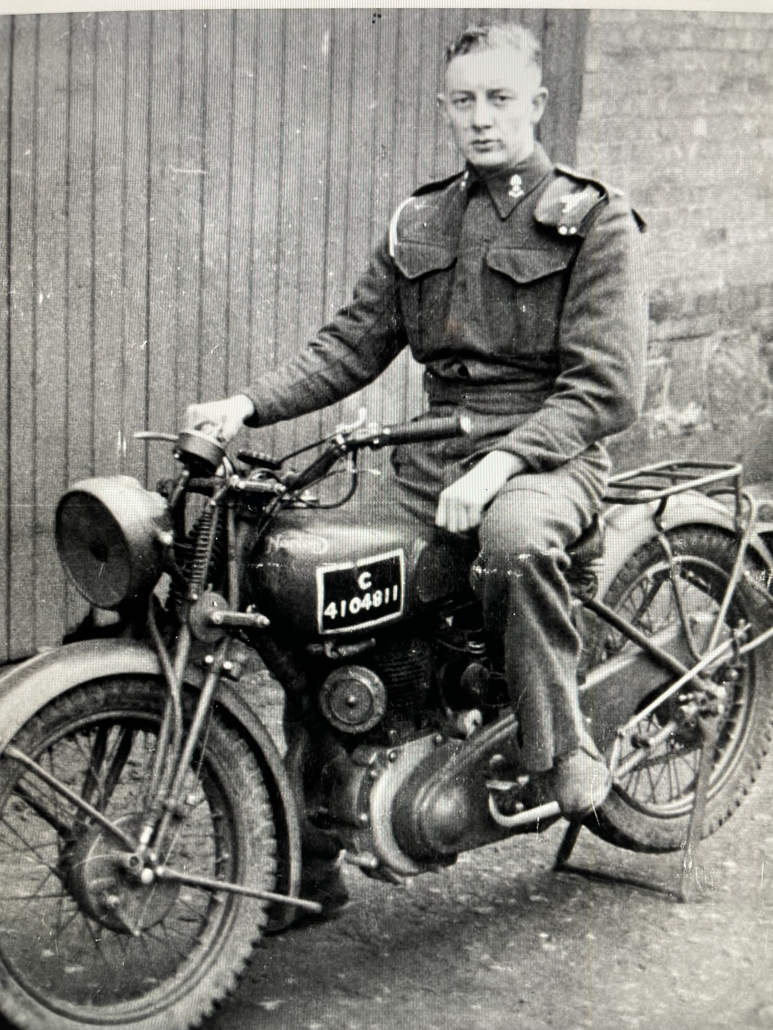
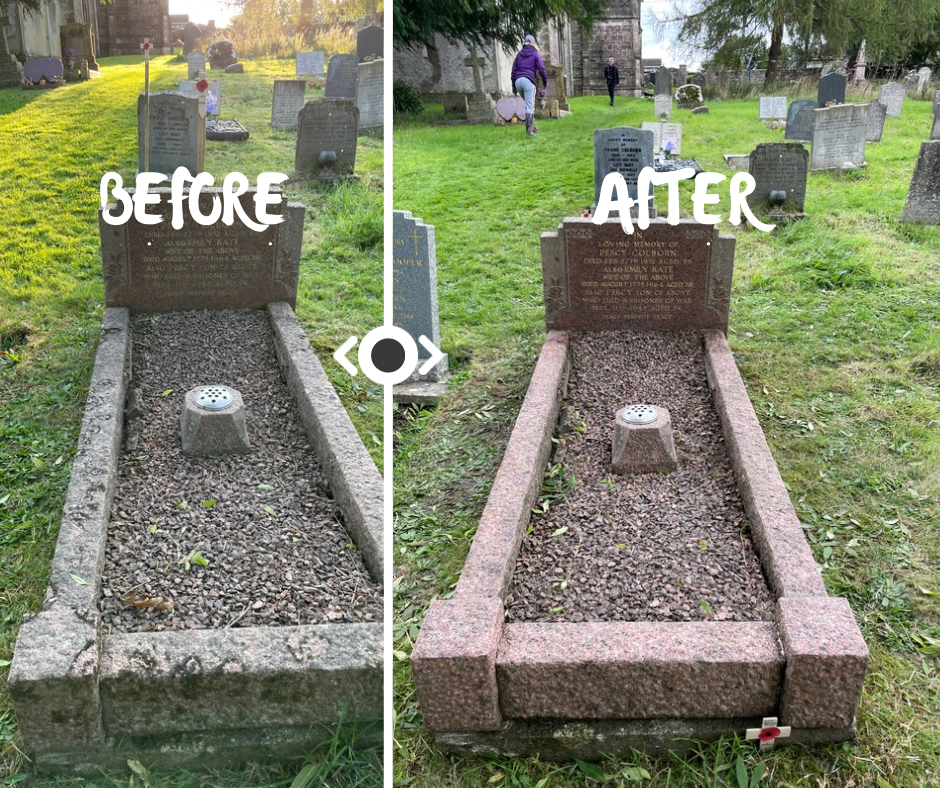
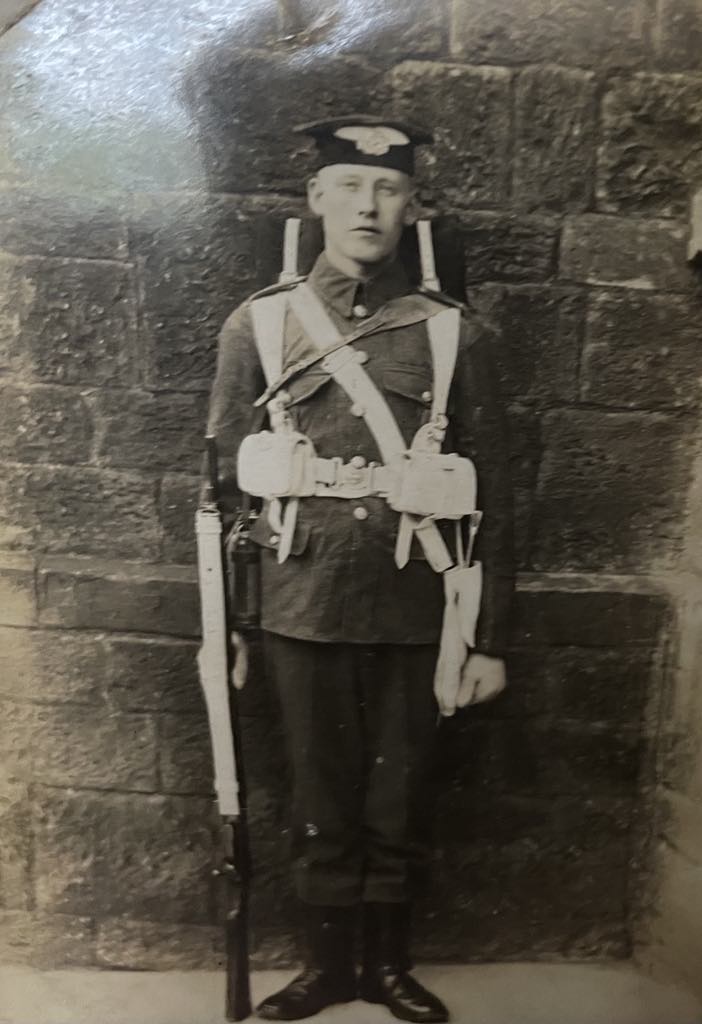
Percy’s father was a tile worker and he lived with his parents, Percy and Emily Kate at 2 Station Road, Charfield. Percy senior may have served in the Army a child solder, as evidence by the photographer shared by the family, before then again signing up for WW1 later in life.
Army Veteran, Jenny Naylor, and former service spouse, Sue Purslow, refurbish Percy’s memorial headstoneGunner P Colborn WW2
Young Percy served in the Malayan Theatre of War and was captured and held at Chungkai POW camp Malai 3. Percy was one of many soldiers who perished from abuse, disease or malnutrition whilst working on the infamous Thai/Burma Railway, constructed during 1942/43. His records indicate that he died from a throat infection. He left his estate to his mother Emily Kate Colborn.
Pte Percy Colborn poss Pre WW1
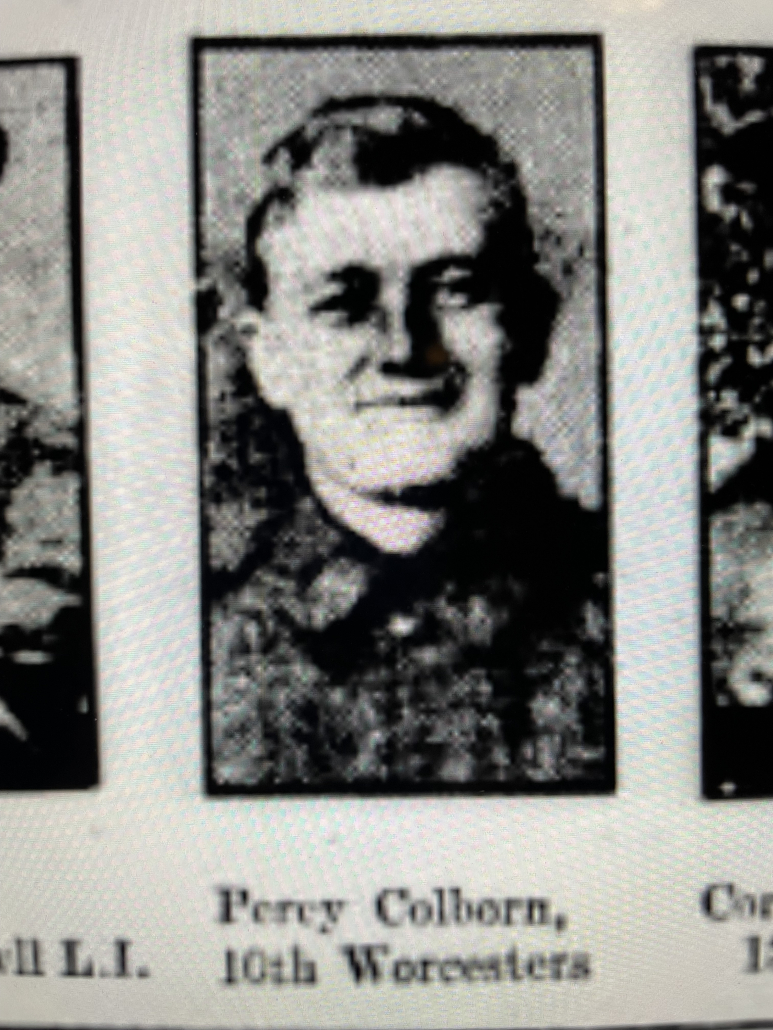
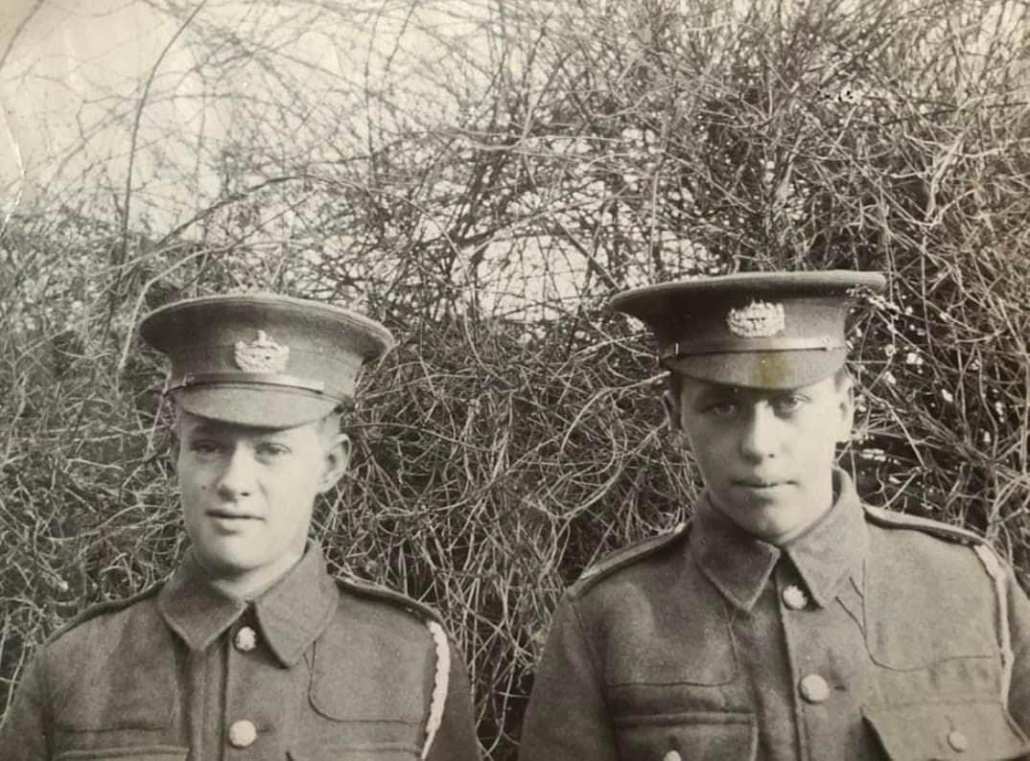
As mentioned previously Percy’s father, also Percy, served in WW1 and was in the 10th Worcesters, his service number was possibly 18640 before changing to 508030 the he transferred to the Labour Corps later in the war.
Percy was one of four brothers who fought in WW1. You can read more about George, Frank and William in other posts on the page.
https://veteransontheedge.co.uk/wp-content/uploads/2026/01/Unknown.jpg1024702Naylorj542http://veteransontheedge.co.uk/wp-content/uploads/2025/11/New-Logo-Small-300x284.pngNaylorj5422026-01-11 15:34:322026-01-11 16:08:36Percy COLBORN, Father and Son, – Charfield
2ndBattalion (A Company), Gloucestershire Regiment
Aged 18 and 19.
Killed in action on 9 May 1915
No known grave–commemorated on the Menin Gate Memorial to the Missing
The stories of the Hughes brother are virtually inseparable. Albert Alexander, known as ‘Alex’, was the elder of the two, having been born in Paddington, London in 1896. Harry was born at Chelsea, London in the following year. They were the sons of George A and Annie E Hughes (nee Harding) of The Wye, children and had six other siblings.
Prior to enlisting in the Army in January 1915 both were mill hands. Their Army numbers are consecutive which indicates they both signed up at almost exactly the same time. It is likely that one or both lied about their age, in order to avoid being held back in the UK until they were 19.
They were posted the 2nd Battalion of the Glosters, which had been sent to join the BritishExpeditionary Force (BEF) in France in mid December 1914. The Hughes boys arrived in France on Good Friday, 2 April 1915, as part of a draft to replace casualties. They were both assigned to ‘A’ company.
In late April the 2 nd Glosters were deployed just south of the Menin Road, near to the village of Hooge, in what was known as ‘The Ypres Salient’ in the front line, facing the Germans in Herenthage Wood. The town of Ypres had tremendous strategic importance and was subjected to heavy fighting throughout the Great War. Its importance lay in the fact that it if it fell the route to the Channel ports, vital to thesupply of BEF, would be open to the Germans.
During April and May 1915 the Germans mounted a series of attacks in the Ypres Salient, which formed part of what became known as The Second Battle of Ypres. By 9 May the British units had been forced to give ground and were entrenched on the eastern edge of Sanctuary Wood, facing a German strongpoint named Stirling Castle. Both 8 and 9 May had seen the British subjected to heavy artillery bombardment and heavy fighting ensued. It is possible that the Hughes brothers took part in a British counter attack which went in at 3.30pm on the 9th, which was subjected to heavy machine gun fire from parts of Sanctuary Wood and Stirling Castle. On the 9th the 2ndGlosters lost 5 officers and 140 other ranks, killed wounded or missing. It is almost certain that the Hughes brothers were part of the 140. The Dursley Gazette reported that one of their comrades sent a letter to his parents in Wotton-under-Edge in which he spoke of ‘seeing the Hughes boys bowled over’ which was conveyed to the boys’ parents in Charfield.
The Hughes brothers enlisted, served and died together on the same day. If their bodies were recovered they were probably buried locally, only to be disturbed in the subsequent fighting in the area. They are commemorated, together, on the panels devoted to the Gloucestershire Regiment located on the Menin Gate Memorial to the Missing of the Ypres Salient.
Their brothers Joe and George Hughes also served in the Great War (with the Army Service Corps and Glosters, respectively) and survived.
The idea of a Charfield memorial was first raised by their brother, Joe, in early February 1919, in a letter to the local newspaper. The village Parish Council took up the administration of the task and a committee was set up to gather subscriptions for costs and the manage the work itself. The final cost was around £200 (around £6500 today).
Work on building the Memorial commenced soon after, with Mr W. T. Goscombe, a local contractor being employed. The centre piece took the form of a Portland stone Gloucester Cross, with the names of the fallen inscribed at the base. Panels on the surrounding wall listed the names of others who served.
Although completed at the end of September 1919, the formal dedication did not take place until 2.45 pm on 28th February 1920. A large crowd gathered. Amongst it were many relatives of the fallen, who were later to place floral tributes. Over the Cross was draped a large Union Flag and the task of removing this was given to Frances Beatrice Neal, the only child of the village rendered fatherless by the War – her father went down with HMS Monmouth at the Battle of Coronel in November 1914.
Thanks to Alexis Threlfall, Graham Adams and others for the information in this and photographs.
https://veteransontheedge.co.uk/wp-content/uploads/2026/01/IMG_2835.jpeg7941074Naylorj542http://veteransontheedge.co.uk/wp-content/uploads/2025/11/New-Logo-Small-300x284.pngNaylorj5422026-01-11 15:02:332026-01-11 16:09:55Albert and Harry HUGHES – Charfield
Died aged 26 as a prisoner of war 23 December 1914
No known grave – commemorated on the Le Touret Memorial, France
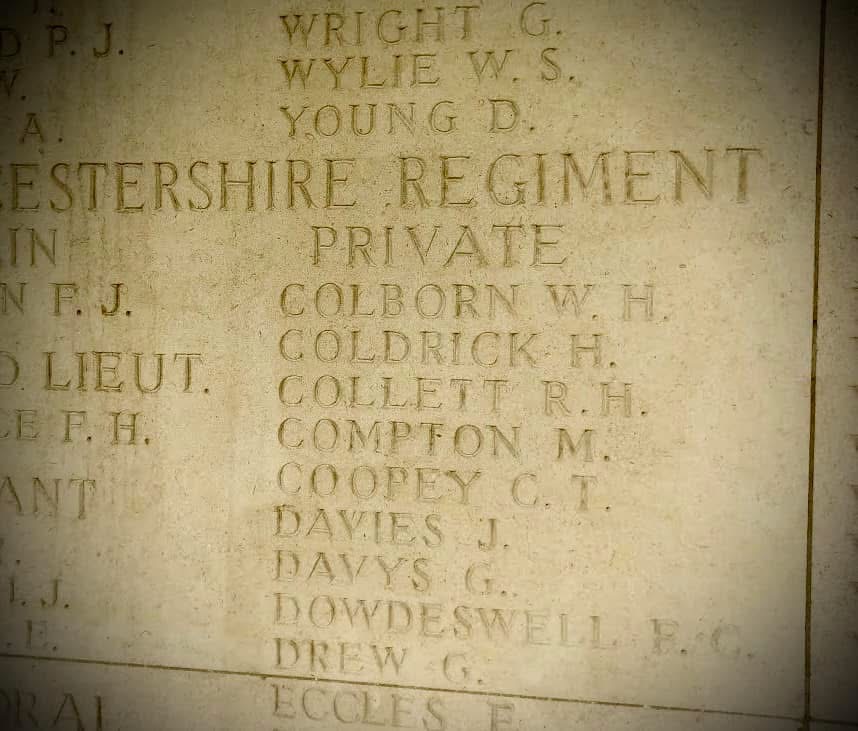
William Colborn was born in Charfield in 1888, the eldest of nine children born to George and Hannah Colborn of Station View, Charfield.
In the 1911 Census he is shown as being a ‘general labourer’ and given his low Army number and the fact that he served with the 1st Battalion of the Gloucestershire regiment, he may well have had some military experience prior to the start of the Great War.
Unfortunately, no Army Service record has survived by his Medal Index Card does show that he first landed in France on 11 September 1914, which was about a month after the 1st Glosters were first deployed there, as part of the British Expeditionary Force.
He would have joined the 1st Glosters just as the tide was turning in favour of the British and French forces, following the long retreat from Mons to the River Marne.
Pte Colborn was reported as ‘wounded and missing’ in the War Office Casualty List published in newspapers, such as the Gloucester Journal, in March 1915.
However, it would appear that he was taken prisoner, probably whilst fighting was taking place in the area between Bethune and Armentieres and possibly died of wounds shortly after, as the records of the International Committee for the Red Cross do not contain evidence of incarceration in any prisoner of war camp. It must have been established that he died on 23 December 1914, aged 26 and was probably buried locally by the Germans and his grave was subsequently lost, hence his name being recorded on the Le Touret Memorial to the Missing.
Thanks to Alexis Threlfall and Helen Date for the research and images.
Died of wounds, aged 21, on 3 November 1914, whilst a prisoner of war.
Buried in Ixelles Cemetery, Brussels
Albert James Richards was born in Charfield in 1893. He was the son of George and Deborah Richards, who by the time of the 1911 Census had had seven children, six surviving by that time.
The family lived on Wotton Road and George was the village postmaster and Chairman of the Parish Council.
Bert Richards (he was known) was an apprentice tailor in 1911 and also spent time as a rural postman. Although his Army Service record has not survived he
reportedly enlisted in the Army in September 1913, having served previously with the Dursley Territorials.
He joined the 9th (Queens Royal) Lancers, a cavalry unit, where he had the rank of Trooper or Private. As part of the Regular Army he was sent with his unit to France in the second week of August 1914 and thereafter would have seen action resisting the German advance through
Belgium and France (known as the Retreat from Mons), before the tide turned and the British and French forces drove the German Army back north.
In October the front lines had settled around the town of Ypres and the 9th
Lancers were deployed near to the town of Messines. Bert Richards was reportedly safe until at least the 24 October. At dusk on 30 October the 9th Lancers took over the front line trenches, as dismounted cavalry and suffered heavy shelling all night, with frequent German attacks during the night and through the following day. They managed to hold on for 23 hours before being forced to withdraw having sustained 75% casualties amongst officers and 35% in other ranks. Their war diary notes that three men were posted as missing and it is likely that Trooper Richards was one.
He would have received initial medical treatment by the Germans before being sent to a hospital in Brussels. Here he died of his wounds on 3 November 1914, aged 21 and was buried in Ixelles Cemetery, Brussels.
His brothers, Charles, Harold and Griffith all served in the Great War and are named on the panels behind the village war memorial of those men of Charfield who served and survived.